
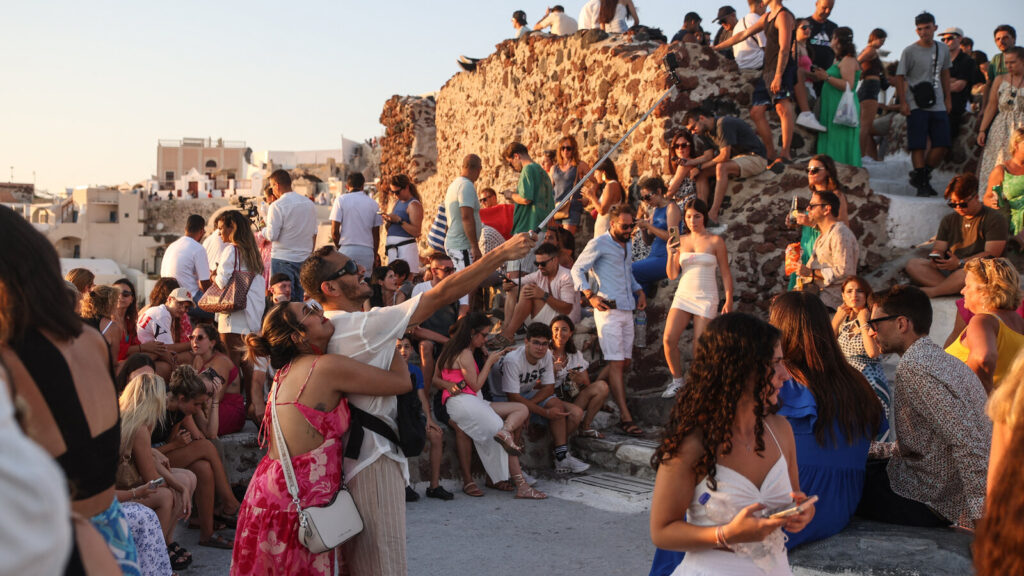
Protests Subside as Tourist Season Winds Down
Madrid — Earlier this year, Europe witnessed a surge in anti-tourist demonstrations, ranging from water gun attacks on diners in Spain to protests against billionaire Jeff Bezos in Italy. However, following the conclusion of the summer travel peak, many popular destinations are experiencing a reduction in tensions. This past weekend in Madrid, thousands of American NFL fans attending the game between the Washington Commanders and the Miami Dolphins were greeted warmly.
The festive environment stands in stark contrast to the frustrations expressed by residents and travelers during the summer months. Locals in tourist-heavy cities like Paris and Madrid have voiced concerns about being pushed out of their neighborhoods due to economies that prioritize high-spending visitors. This sentiment has led some tourists to reconsider their travel plans.
‘Some Americans have been hesitant to visit Barcelona due to fears of being targeted with water pistols,’ said Mark Meader, vice president of the American Society of Travel Advisors, at a recent summit.
This year saw locals in Barcelona soaking tourists with water guns while chanting for their city back. Residents attribute rising rents and congestion to tourism’s impact on their communities. Similar unrest was reported in Paris, where workers at the Louvre threatened strikes due to overwhelming visitor numbers.
Troublesome behavior from some tourists has exacerbated these issues; for instance, a couple from the UK was banned from Venice for swimming in a canal, with local authorities issuing over 1,100 fines for similar misconduct this year.
<pdespite these challenges, many locals do not oppose tourism itself but rather what they term 'touristification.' A representative from Spain's Neighborhood Assembly for Tourism Degrowth emphasized that they seek balance rather than outright opposition.
<pthis past weekend saw no significant anti-tourism protests despite large crowds of American visitors filling Madrid’s streets. The wedding of billionaire Jeff Bezos did not incite backlash either; instead, residents expressed frustration over how tourism affects their daily lives.
<presidents like Sara Antonelli highlighted how tourism has made everyday activities challenging: ‘It’s gotten so bad that we must wait in line even at grocery stores.'<pVenice’s population is just 50,000 yet faced 20 million tourists last year—a figure expected to rise further by 2025. Antonelli lamented that Venice should not become a destination solely for extravagant weddings.<pprotests throughout summer featured slogans such as 'Tourism is stealing from us' and 'Leave us alone,' reflecting deeper issues tied to housing crises fueled by short-term rentals like Airbnb. In Spain alone, rental listings surged by 25% over two years according to Exceltur.
<pas summer concluded, protests diminished significantly. In Madrid’s case, most attendees at Sunday’s NFL game were European locals rather than American tourists. The league has been actively engaging with local communities without raising concerns among residents regarding its presence.
<pin response to ongoing challenges posed by tourism growth, several European nations are considering new regulations. For example, Iceland plans an increased tourism tax aimed at mitigating visitor impacts while Spain mandates registration for short-term rental owners and has removed over 60,000 non-compliant listings from platforms like Airbnb.


