
Growing Pressure on the NWSL
As scrutiny intensifies, the National Women’s Soccer League (NWSL) faces calls to implement sex testing protocols following allegations regarding a prominent player’s gender identity.
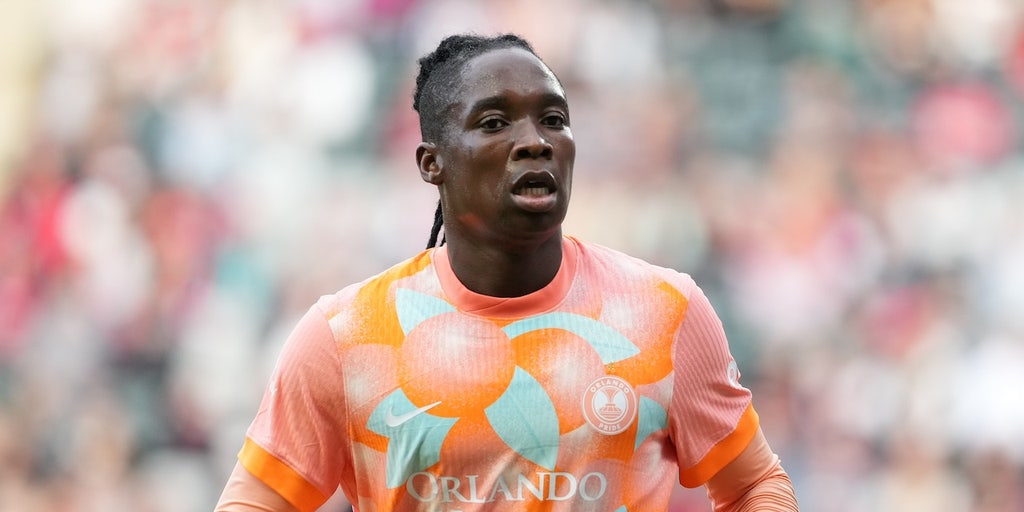
This week, Orlando Pride forward Barbra Banda, 25, made headlines again after being selected for the women’s 2025 FIFPRO World 11, an all-star team voted on by players. This has reignited discussions about the Zambian-born athlete’s gender.
A number of advocates for women in sports have voiced their concerns over Banda’s inclusion. Notably, Jennifer Sey, CEO of XX-XY Athletics, expressed her views on social media, stating: “It isn’t hateful to state the truth. Banda is male. Women’s sports are for women only.”
The NWSL quickly came to Banda’s defense, celebrating her talent and condemning any form of harassment directed at her. In a statement released Tuesday, the league affirmed its support: “We stand unequivocally with Barbra and with every NWSL player.”
This is not the first instance where the league has backed Banda since she joined Orlando Pride last year under a significant four-year contract despite previous concerns regarding her gender identity stemming from the 2022 Africa Cup of Nations.
The African soccer federation determined that Banda’s naturally occurring testosterone levels exceeded those permitted in women’s categories. Although she and three other athletes were given the option to take testosterone-reducing medication, they declined.
Banda has already proven valuable to Orlando Pride; she led them to victory in the 2024 NWSL title and earned MVP honors after previously playing in leagues across Africa, Europe, and China.
Banda also represented Zambia at both the 2021 and 2024 Olympic Games under varying sex-eligibility regulations. She notably scored three hat tricks during these events, making history as the only player—male or female—to achieve this feat.
The eligibility criteria regarding gender within the NWSL remain ambiguous; it appears there are no established rules currently in place. Previously, transgender athletes were allowed to compete if they maintained testosterone levels within typical limits for female athletes; however, this policy seems to have been removed without a replacement.
Last week, veteran player Elizabeth Eddy urged for clearer standards on gender eligibility that could potentially include sex testing through methods like cheek swabs. She emphasized that uncertainty surrounding intersex and transgender athletes creates unnecessary controversy.
The article calls for genetic testing on certain players… To me it’s inherently racist because to single out this community based on them looking or being different is absolutely a problem.” – Sarrah Gorden
Eddy’s op-ed did not mention Banda directly but sparked backlash from her teammates who labeled her call for genetic testing as transphobic and racist due to its implications regarding race and identity.
The Broader Context of DSD Athletes
Banda may be among those with Differences in Sexual Development (DSD), a condition where individuals may be born with ambiguous genitalia yet raised as girls while producing male-level testosterone during puberty. Several African track athletes who have won Olympic medals are believed to share this condition.
New Testing Requirements Announced
This past July, World Athletics mandated that athletes wishing to compete in female categories must undergo a one-time test for the SRY gene—a reliable indicator of biological sex—through either blood tests or cheek swabs.
NWSL’s Commitment Moving Forward
An NWSL spokesperson indicated that any changes regarding gender-verification standards would involve collaboration with the Players Association: “This ensures that our players’ voices are central… reinforcing our commitment to inclusion.”


