
Opinion
Christmas symbolizes the birth of a child. While many celebrate the Nativity, the reality is that our cradles are becoming increasingly empty—a trend that may not bode well for society. The significant decline in fertility rates, often referred to as demographic winter, could threaten the future of civilization.
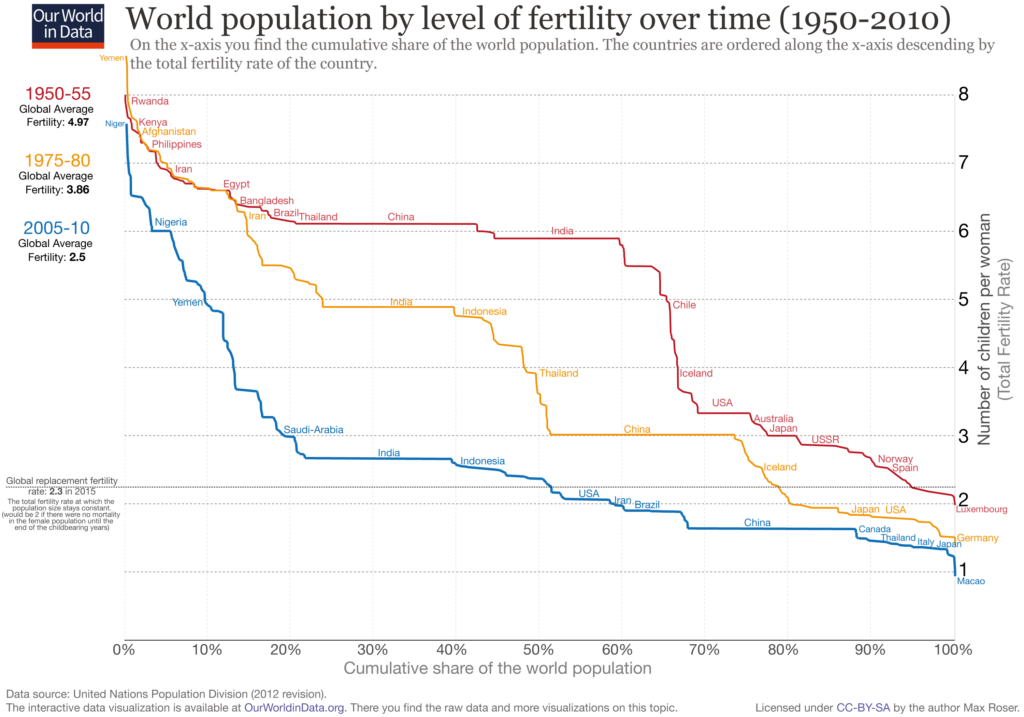
With few exceptions in sub-Saharan Africa and parts of the Middle East, nearly every country is experiencing below-replacement fertility rates. This trend suggests that a global population decline is imminent, though its ultimate consequences remain uncertain.
The fertility rate in America has plummeted from approximately 3 births per woman during the baby boom era to just 1.62 today—well below the replacement level of 2.1 births per woman.
Despite this decline, the United States still has a higher birth rate compared to other developed nations. For instance, Britain’s total fertility rate stands at 1.41, Germany at 1.35, and Italy at 1.2.
Asia faces even more severe challenges; Japan’s total fertility rate is only 1.15, while China’s is at 1.0 and South Korea’s has dropped to an alarming 0.72. Japanese Prime Minister Sanae Takaichi has identified this baby bust as her country’s most pressing issue, especially considering that nearly 30% of Japan’s population is over 65 years old—compared to just 18% in the United States.
The phenomenon of “lonely death” has emerged in Japan due to many individuals passing away alone.
This decline in fertility will have far-reaching effects on society. Questions arise about where future workers will come from and how we will sustain pension systems for an aging population. As the workforce shrinks, essential services such as law enforcement, healthcare, and education may struggle to function effectively.
The drop in marriage rates parallels falling fertility numbers; in 1970, married couples made up 71% of American households but by 2022 that figure had decreased to just 47%. Like their Japanese counterparts, many Americans are opting for solitary lifestyles.
An increasing number of individuals who can have children are choosing not to do so. A recent Pew Research poll indicates that among adults under 50 without children, nearly half (47%) believe they are unlikely to ever have kids—a rise from 37% just five years prior.
While about one-third of men feel there aren’t enough babies being born, only a small fraction (18%) of women share this sentiment. Cultural narratives often suggest that motherhood hinders female empowerment—prompting some women to prioritize education over family life.
Yet parenthood remains one of the most significant roles individuals can undertake—shaping future generations more than any other achievement.
Cultural anxieties surrounding overpopulation have historically discouraged procreation; Paul Ehrlich’s book “The Population Bomb,” published in 1968, predicted dire consequences due to overpopulation—a prediction that did not materialize as expected.
Concerns about climate change further complicate perceptions around having children; former Vice President Al Gore warned about polar bear extinction due to global warming—but current populations indicate otherwise.
Financial burdens associated with raising children also deter many potential parents; however, it raises questions about how previous generations managed larger families during economic hardships like the Great Depression.A combination of feminism, population control ideologies, economic pressures, and climate fears contribute significantly to today’s declining birth rates.
Leaders are exploring various solutions for this demographic crisis—most involving financial incentives—but these measures have shown limited effectiveness. For example, Poland offers substantial monthly allowances for families yet still recorded a postwar low number of births last year compared to deaths.
The key may lie with those who continue to embrace family life: evangelical Christians, traditional Catholics, Hasidic Jews, Mormons and Amish communities actively follow religious teachings encouraging procreation.
Those who maintain hope for the future tend to have children; conversely those lacking faith often do not.
It’s crucial for society to promote marriage and family growth as part of a broader vision for humanity’s future—religious leaders should advocate for larger families during these challenging times.
In this season filled with hope,let us strive towards nurturing faith rather than succumbing to despair over dwindling numbers of children.


