
U.S. Challenges Due Process for Deported Venezuelans
The Trump administration has stated that it is impractical to implement a judge’s directive aimed at establishing new procedures for migrants who have been deported to Venezuela to contest their return.
Secretary of State Marco Rubio informed U.S. District Judge James Boasberg that the U.S. has lost track of the deported Venezuelans and that attempting to provide them with legal recourse could destabilize the already fragile situation in Venezuela.
In a recent filing, Rubio noted that the U.S. operation which led to the arrest of Nicolás Maduro and the establishment of an interim government has resulted in “extraordinarily delicate” negotiations with Delcy Rodríguez, who is referred to as the acting president.
Rubio expressed that addressing the status of 137 deportees believed to be in Venezuela could jeopardize U.S. foreign policy interests.
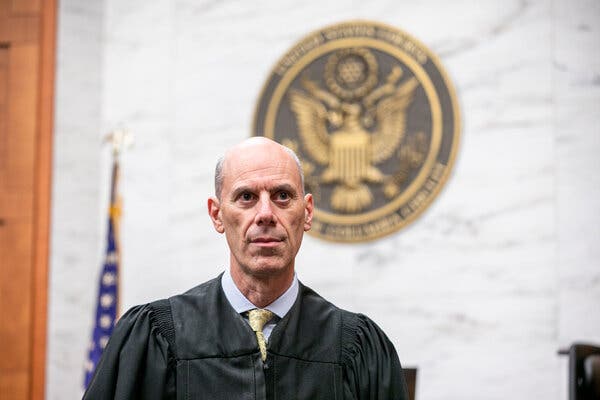
This declaration represents another instance where the administration appears to challenge Judge Boasberg, known for his opposition to President Trump’s policies.
The focus is on Venezuelans deported on March 15 under the Alien Enemies Act, a fast-track process bypassing standard immigration protocols. Trump claims these individuals are affiliated with Tren de Aragua, a gang designated as a terrorist organization by the State Department, thus falling under this 1798 law.
Judge Boasberg asserted that these migrants should at least have an opportunity to prove they are not members of Tren de Aragua before being expelled from the country. He mandated that the U.S. must either bring them back or devise a method for remote hearings.
The Justice Department recently indicated that neither option is feasible, arguing that remote hearings would not fulfill due process requirements and attempting to locate and return individuals from Venezuela could further complicate diplomatic relations.
The March 15 deportation flights have continued to pose challenges for the Trump administration.
A notable case involves Kilmar Abrego Garcia, a Salvadoran individual whom authorities were compelled to un-deport; he currently remains free in the U.S., with Homeland Security instructed not to attempt his re-arrest at this time.
Those aboard three deportation flights on March 15 have alleged mistreatment by U.S. Immigration and Customs Enforcement officials, claiming they were physically coerced onto planes bound for El Salvador, where they faced imprisonment under terrorism charges.
In July, El Salvador released those Venezuelans from their flight back into Venezuela; however, they report living in precarious conditions and express a desire to return to the United States.


