
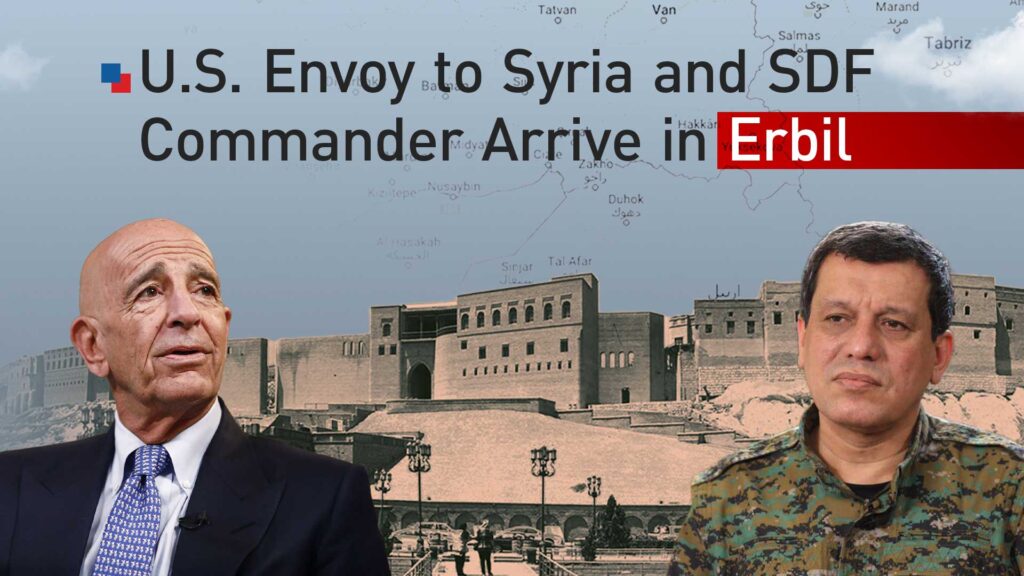
U.S. Special Envoy Meets SDF Chief
On Thursday, U.S. Special Envoy for Syria Tom Barrack held discussions with Mazloum Abdi, the leader of the Kurdish-led Syrian Democratic Forces (SDF), following a series of confrontations between Syrian troops and the SDF.
The meeting took place in Erbil, a Kurdish stronghold located in northeastern Iraq, as reported by Turkish media outlets. During this encounter, Barrack reiterated the U.S. stance that the SDF should fully integrate into the Syrian military.
This meeting follows a critical statement from Barrack earlier in the week, where he indicated that the SDF’s role in combating the Islamic State had “largely expired” and emphasized that the U.S. would not support an independent SDF within Syria.
The SDF has been a crucial ally for Washington throughout nearly 15 years of civil conflict in Syria, providing stability to northeastern regions while utilizing U.S. resources to combat IS.
However, dynamics shifted significantly after President Ahmad al-Sharaa assumed power following the fall of Bashar Assad’s government in December 2024. The U.S. has since aligned itself with al-Sharaa’s administration, advocating for lifting Western sanctions against his government.
In March, U.S. officials facilitated an agreement aimed at integrating Kurdish forces into Syria’s regular army by late 2025; however, mistrust among SDF members hindered its execution. Clashes between Syrian forces and SDF fighters have further complicated matters, particularly intense confrontations in Aleppo.
The Syrian government has accused SDF leaders of obstructing progress on negotiations, claiming that Abdi has rejected reasonable proposals. Meanwhile, frustrations have mounted among U.S. diplomats regarding these stalled discussions.
The SDF asserts it is striving for a deal that ensures security for Kurdish communities amid fears that a centralized government led by al-Sharaa could incite sectarian violence against Kurds if they disarm and join the national military.
This month saw renewed fighting between Damascus and the SDF in Aleppo, leading to a ceasefire that allowed for the evacuation of some fighters across the Euphrates River into other controlled areas.
The territory involved is significant as it was seized from IS during Syria’s civil war and contains valuable oil fields along with agricultural regions. It also houses prisons holding numerous Islamic State captives.
The SDF has retreated primarily to Kurdish-majority areas under a four-day ceasefire established on Tuesday, which requires them to finalize plans for merging their forces into the Syrian army or face renewed hostilities from Damascus.
The leadership within the SDF expressed surprise at their diminishing influence in Syria and had sought intervention from international coalitions against ISIS prior to this week’s ceasefire announcement.
Abdi confirmed on Tuesday that his attempts to reach out to U.S. officials had gone unanswered amidst escalating tensions.


