
Significant Military Presence in the Region
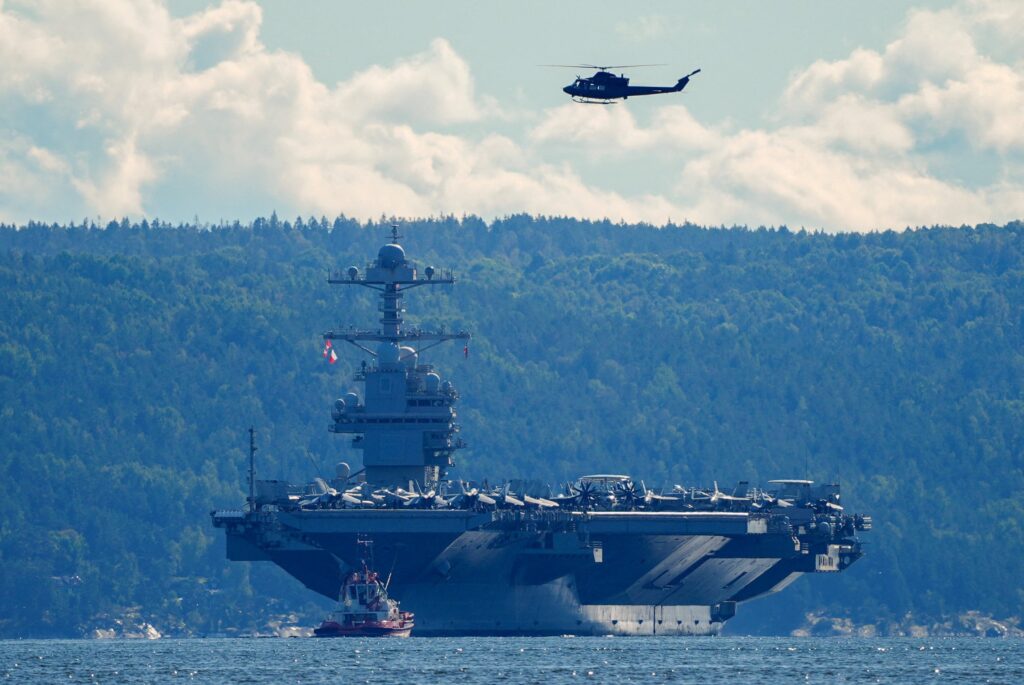
The Pentagon’s largest aircraft carrier has made its way to Latin America, contributing to a substantial U.S. military buildup in response to escalating tensions with Venezuela.
The USS Gerald R. Ford and its accompanying strike group entered the area on Tuesday, following orders issued last month for its deployment. The carrier is equipped with over 4,000 sailors and numerous tactical aircraft.
In addition to the Ford, eight warships, a nuclear submarine, and F-35 aircraft are already stationed in the Caribbean region.
This arrival comes after Defense Secretary Pete Hegseth directed the carrier strike group to assist President Trump’s initiative aimed at dismantling transnational criminal organizations and combating narco-terrorism as part of national defense efforts.
The Trump administration has been amplifying its military presence within the U.S. Southern Command area, which aims to enhance capabilities for detecting, monitoring, and disrupting illicit activities, according to Pentagon spokesperson Sean Parnell.
Tensions have escalated as U.S. military forces have conducted at least 19 strikes against suspected drug boats in international waters, resulting in over 70 fatalities.
President Trump has targeted Venezuelan President Nicolás Maduro, accusing him of facilitating drug trafficking into the United States—a claim that Maduro has denied.
This situation has sparked speculation regarding Trump’s intentions to remove Maduro from power; he mentioned on CBS’s “60 Minutes” that Maduro’s days are “numbered.”
Senate Democrats have attempted unsuccessfully to introduce legislation aimed at halting boat strikes and preventing any potential war with Venezuela.
Navy Admiral Alvin Holsey stated that through dedicated efforts and precise military actions, they are prepared to confront transnational threats that could destabilize the region.


