
Ukraine’s Acceptance of Peace Terms
Ukraine has agreed to the essential components of a peace agreement facilitated by the United States, aimed at resolving its ongoing conflict with Russia. However, finalizing the deal remains challenging due to unresolved issues regarding territorial concessions to Moscow.
President Trump expressed hope on Tuesday, indicating that negotiators are close to reaching an agreement while applying public pressure on Russian President Vladimir Putin to expedite the peace process.
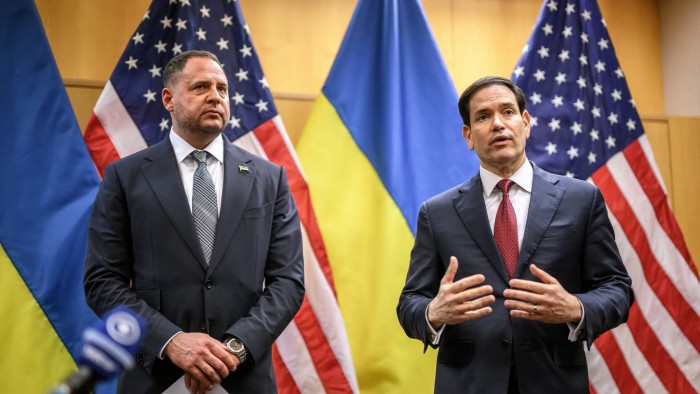
The negotiations have led to significant changes in the original 28-point proposal put forth by the Trump administration after recent discussions between U.S. and Ukrainian officials in Geneva. The initial plan faced backlash in both America and Europe for being too lenient towards Russia and potentially enabling further military aggression against neighboring nations.
White House Press Secretary Karoline Leavitt noted on social media that only a few sensitive details need resolution among the U.S., Ukraine, and Russia. Meanwhile, U.S. Army Secretary Daniel P. Driscoll continued diplomatic efforts by meeting with Russian officials in Abu Dhabi, marking a return to direct American engagement with the Kremlin following recent Russian strikes on Kyiv that resulted in casualties.
Trump announced via Truth Social that special envoy Steve Witkoff would be meeting with Putin in Moscow while Driscoll holds further discussions with Ukrainian representatives. The president expressed his desire to meet personally with both Ukrainian President Volodymyr Zelenskyy and Putin as negotiations progress towards completion.
Ukrainian National Security Adviser Rustem Umerov clarified that Ukraine has not officially accepted any proposals but has reached a mutual understanding with Washington regarding the revised Geneva plan. The specific adjustments and points of consensus or contention remain unclear.
The original proposal required Ukraine to cede control over its Donetsk and Luhansk regions as well as Crimea, which has been under Russian control for over ten years. Additionally, it stipulated that Russia would retain other parts of Ukrainian territory while withdrawing troops from certain occupied areas. The plan also included restrictions on NATO troop deployments in Ukraine and significantly limited Kyiv’s military capabilities.
British Prime Minister Keir Starmer acknowledged that the initial 28-point plan included unacceptable terms but praised ongoing American efforts toward peace. Russian Foreign Minister Sergey Lavrov stated that Moscow had yet to review the latest version of the proposal and would assess any new agreements based on previous understandings from Trump’s August meeting with Putin in Anchorage, Alaska.
The status of Ukraine’s NATO aspirations continues to pose a significant challenge, as Russia has cited these ambitions as one of its primary justifications for invasion.


