
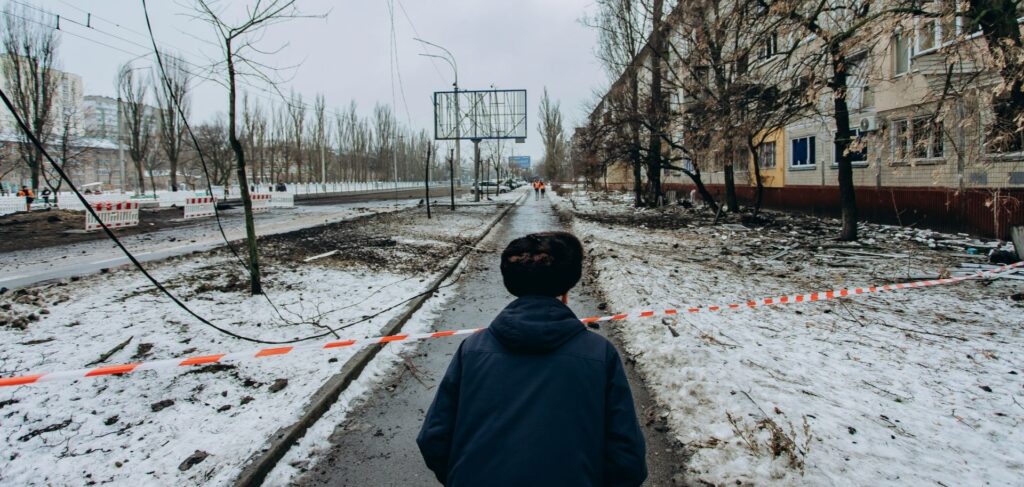
Intensified Attacks on Energy Infrastructure
In the lead-up to Christmas and the harsh winter months, Ukraine is experiencing a surge in missile and drone strikes targeting its energy infrastructure. These relentless assaults have resulted in widespread blackouts, reminiscent of the severe outages seen earlier this year.
The Ukrainian capital, Kyiv, has been forced to rely on emergency gas imports from the United States as engineers scramble to maintain power. Residents have reported hearing “explosions echoing for hours” as air defenses struggle against swarms of drones.
Iulia, a Kyiv resident, shared her experience: “We do our laundry at 2 a.m., or we go to work at our colleagues when we don’t have power at home. We survive.” Checking local energy provider websites for outages has become part of daily life, with diesel generators now commonplace on the darkened streets.
Maksym Timchenko, CEO of DTEK, described the attacks as a tactic aimed at keeping people cold and in darkness, fitting the definition of terrorism. He noted that recent strikes involve multiple drones and missiles targeting civilian infrastructure rather than military sites.
President Volodymyr Zelenskyy has repeatedly urged Western allies for more air defense systems to counter these intensified assaults. He emphasized the importance of fighting back and achieving successful interceptions during these attacks.
The ongoing strikes have severely impacted Ukraine’s already fragile energy grid. Key facilities like the Trypilska and Zmiivska power plants have suffered extensive damage, leading to rolling blackouts across regions.
The International Energy Agency reports that Ukraine’s power grid capacity has plummeted to about half since Russia’s full-scale invasion began in February 2022. The World Bank estimates reconstruction needs at $524 billion, with approximately $68 billion required specifically for the energy sector.
Despite some restoration efforts yielding additional capacity through imports from neighboring grids, Ukraine’s energy system remains precarious due to reliance on a diminishing number of large plants.
Energy strategist Oleksandr Kharchenko noted that Russia appears to be shifting tactics by targeting previously overlooked substations while attempting to disrupt power supply across frontline regions.
DTEK reports that thermal-power operators are frequently targeted and are nearing their limits in terms of sustaining repeated strikes. Repair times have extended significantly due to equipment shortages and escalating damage.
As Russian aerial assaults continue, Ukraine is actively seeking alternative fuel supplies. In November, it received its first shipment of U.S.-sourced liquefied natural gas via Lithuania’s Klaipėda terminal—a crucial step toward diversifying winter supply routes.
The government has also secured agreements with Greece for additional LNG shipments through a pipeline complex designed for transporting gas northward into Europe throughout winter. Domestic production alone cannot meet Ukraine’s needs after months of conflict-induced declines.
However, these emergency measures are fraught with risks; Russian missiles have already targeted critical infrastructure connecting Ukraine’s western regions with European grids—essential lifelines for both households and industries.


