
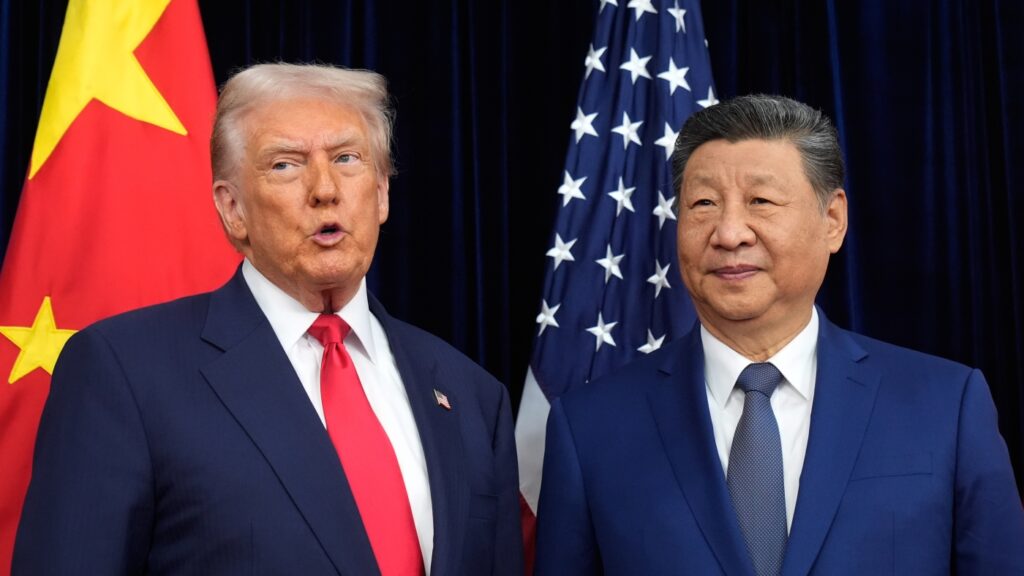
Trump’s Nuclear Testing Threat
President Trump’s recent suggestion to resume nuclear weapons testing has raised alarms in both Moscow and Beijing, causing frustration among U.S. non-proliferation experts who believe the administration is sending conflicting messages regarding a critical global security issue.
On October 29, Trump stated that it may be necessary to lift the three-decade moratorium on nuclear tests due to Russian and Chinese nuclear arsenals nearing U.S. levels, alongside other nations engaging in testing activities.
This announcement has intensified concerns about the future of international nonproliferation standards, prompting speculation about whether we are entering a new phase of significant nuclear testing among major powers.
Former Secretary of State Mike Pompeo expressed support for Trump’s position, suggesting that exploring all options is justified in light of current global dynamics. He emphasized the importance of demonstrating to adversaries that U.S. capabilities are reliable.
In a post on his Truth Social platform, Trump indicated that due to other countries’ testing programs, he would instruct the Department of War to initiate U.S. nuclear tests on an equal footing. This was reiterated during an interview with 60 Minutes where he claimed the U.S. is currently the only nation not conducting such tests.
The comments have elicited swift reactions; Beijing denied any recent nuclear tests while Russian President Vladimir Putin hinted at considering resuming their own testing programs in response. Moscow officials are also seeking clarity on what this shift in U.S. policy entails.
Daryl Kimball, executive director of the Arms Control Association, voiced concerns over Trump’s threats and questioned what outcomes he expects from Russia and China through such statements.
Peskov, spokesperson for Putin, remarked that discussions around nuclear testing require precise definitions and interpretations following Trump’s social media comments.
As tensions rise, Pompeo noted that this situation challenges long-standing deterrence models established since the Cold War—models reliant on careful public and private interactions between major powers aimed at maintaining peace.


