
Security Implications of Stopping Construction
President Trump’s proposal for a ballroom at the White House is under scrutiny, with the Secret Service informing a federal judge that halting the project could jeopardize security measures. Officials have assured that they will provide more transparency and necessary approvals as construction progresses.
Government lawyers indicated that the design for the ballroom is still being finalized, meaning no plans have yet been submitted for approval to relevant commissions. They argued that any legal challenge at this stage is premature.
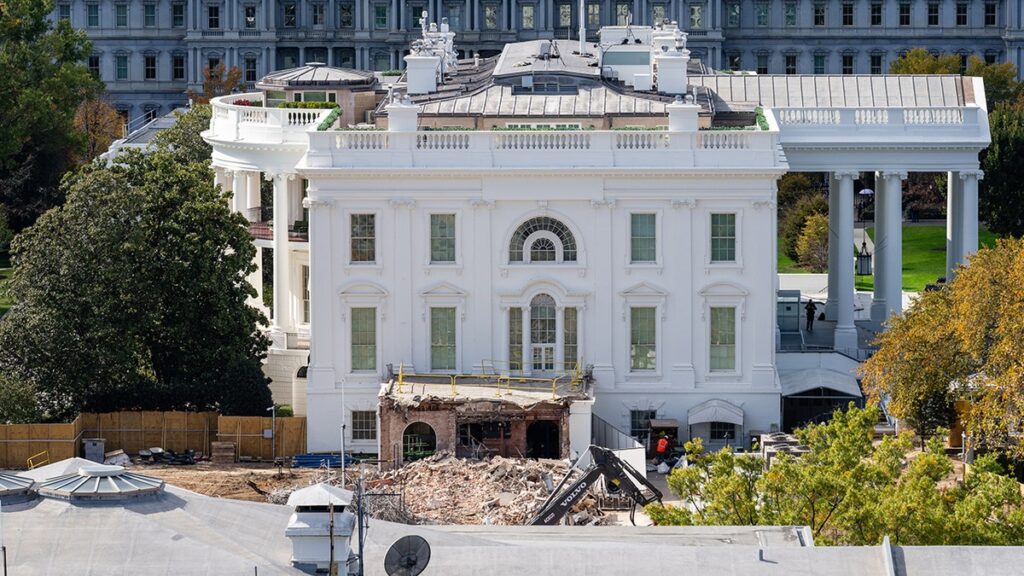
With the old East Wing demolished, contractors are working swiftly to implement temporary security protocols to safeguard the White House complex, according to Secret Service Deputy Director Matthew Quinn. He noted that while he couldn’t disclose specifics in open court, he could share details in a classified setting.
Quinn emphasized that any interruption in construction would hinder the contractor’s obligations and impede the Secret Service’s protective mission. The case is set for an initial hearing soon, with the National Trust for Historic Preservation seeking a temporary restraining order against ongoing work. They argue that Trump’s vision for a large building conflicts with its historic surroundings.
The trust claims Trump failed to comply with legal requirements by not submitting his plans to two federal commissions and Congress before starting his project. Attorney Gregory Craig stated in court filings that this oversight deprives the public of crucial opportunities to comment on significant alterations to such an iconic structure.
The proposed ballroom has expanded from an initial 90,000 square feet to a size described by Trump as “double” his original plans, featuring enhanced finishes and interiors. He asserted on social media that funding comes from private donations without taxpayer involvement.
The East Wing, which houses offices for the first lady, was built in 1902 alongside its counterpart, the West Wing. It underwent expansion in 1942 with additional features like a bunker and movie theater. The garden outside was established in 1903 and later named after Jackie Kennedy but has also been affected by current construction activities.
The case has been assigned to Judge Richard Leon, appointed by George W. Bush. Demolition was completed recently, but officials noted that underground work will continue for several months before any above-ground activity can commence.
Craig pointed out that two commissions—the National Capital Planning Commission and the Commission of Fine Arts—are responsible for reviewing federal projects within Washington D.C., yet neither has seen any plans related to this project. Trump has dismissed all members of one commission, leaving it vacant.
The lawsuit demands all construction be paused until Trump submits his plans to appropriate boards for review. Mark Widerschein from the Justice Department argued against this request, suggesting it would be more prudent to wait until final plans are available before raising objections.


