
Senators Cannot Profit from New Law
Under a new law, senators are prohibited from personally benefiting if they sue the government for damages related to unauthorized access of their phone records during federal investigations.
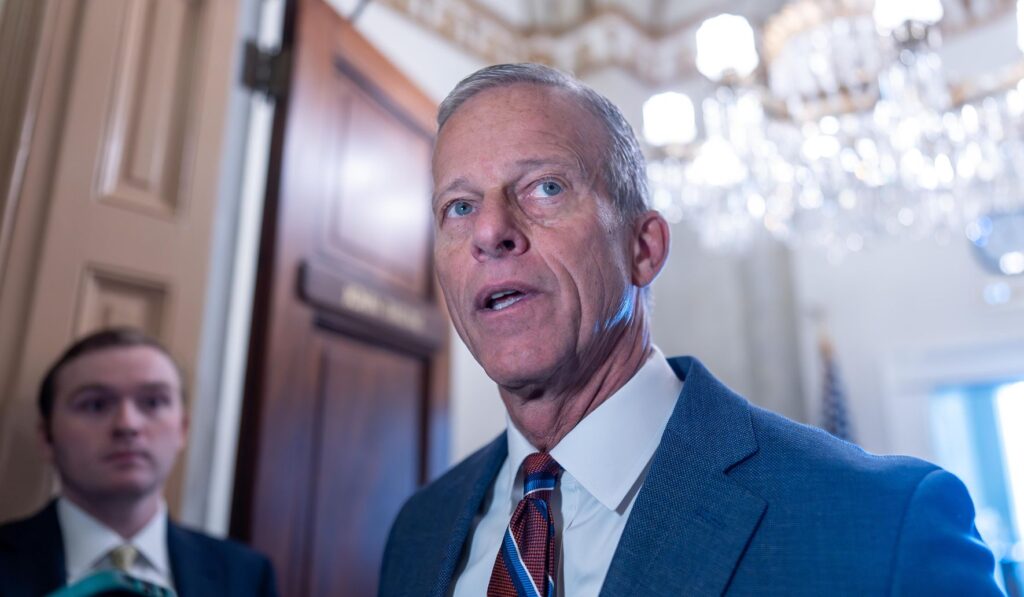
John Thune, the Republican senator from South Dakota, stated on Thursday that any financial compensation awarded under this provision would be directed to the U.S. Treasury. This law was introduced following revelations that phone records of several Republican senators were secretly subpoenaed during the Biden-era Arctic Frost investigation.
“The measure was never intended to enrich senators,” Thune emphasized. “It has always been understood that members would not retain any damages they recover under this provision.”
This clarification came amid bipartisan backlash regarding the provision added to a spending bill aimed at reopening the government. The House voted unanimously on Wednesday to repeal this new law, while Senate Democrats sought its passage on Thursday. Thune’s remarks were part of efforts to counteract that initiative.
The controversy began when Senator Martin Heinrich, a Democrat from New Mexico, attempted to pass the House bill by unanimous consent, criticizing the new law as “a blatant tax-funded cash grab.” He argued that it allowed eight Republican senators to potentially collect millions in damages despite lawful subpoenas issued by the Department of Justice during a grand jury investigation.
Senator Lindsey Graham objected to Heinrich’s request, arguing against the legality of the subpoenas. Graham is among those whose phone records were accessed by former special counsel Jack Smith while investigating challenges related to the 2020 election results.
“What justification did we have for Jack Smith issuing a subpoena for our phone records?” he questioned, asserting that such actions violate existing laws protecting legislative communications.
The legislation enhances existing laws requiring telecommunications providers serving Senate offices to notify them if they receive legal requests for data. If these notification requirements are violated in federal investigations, senators may sue for up to $500,000 per violation.
Thune sought unanimous consent for a resolution clarifying that any awarded damages must be forfeited due to conflict-of-interest rules governing senators. These rules prevent lawmakers from receiving compensation resulting from undue influence exerted through their positions.
“It’s an important defense of separation of powers,” Thune remarked, highlighting its role in safeguarding both parties against potential misuse by an overreaching Department of Justice.
Heinrich opposed Thune’s request, advocating instead for statutory changes that clearly define legislative intent rather than relying on nonbinding resolutions. Thune expressed willingness to strengthen protections as more details about the Arctic Frost investigation emerge.
“If they can do this to a United States senator, what can they do to you?” Graham warned about potential overreach affecting ordinary citizens based on their political activities or opinions.


