
Texas Files Emergency Request
On Friday, Texas presented a significant voting-rights issue to the Supreme Court, requesting permission to implement its newly drawn congressional map in the upcoming 2026 elections.
Attorney General Ken Paxton argued that the map was designed to support Republican interests and contended that it did not constitute racial gerrymandering, contrary to a lower court’s ruling.
Paxton accused “radical left-wing activists” of manipulating the judicial system to undermine Republican efforts and claimed they were attempting to secure control of the U.S. House for Democrats. He dismissed allegations of racism as unfounded, asserting they stemmed from Democratic losses.
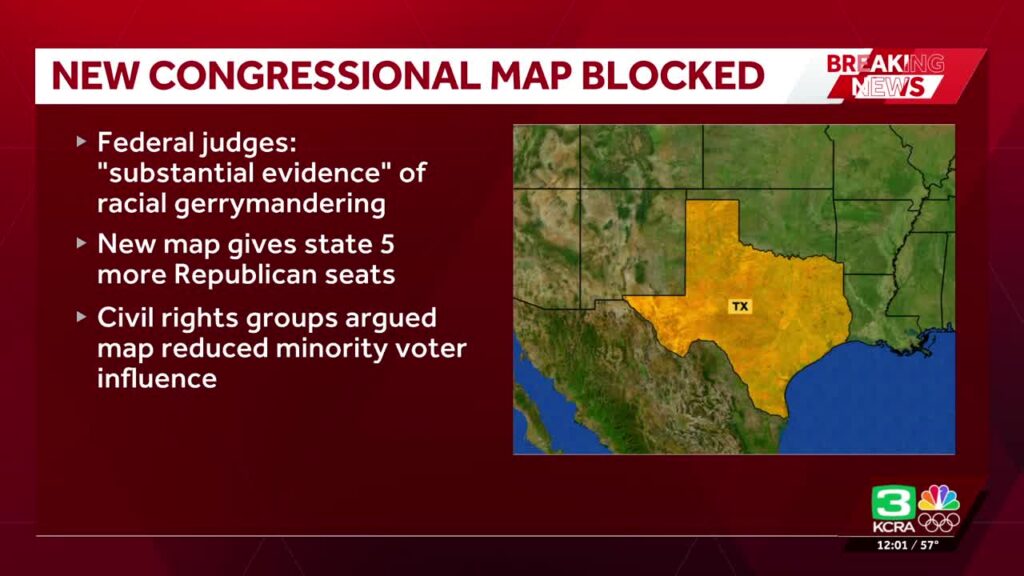
A three-judge panel in Texas recently ruled against the new map, stating that it was motivated by racial considerations when several majority-minority districts were replaced with more Republican-friendly lines. The court ordered Texas to revert to its previous map for the 2026 elections.
Circuit Judge Jerry Smith expressed strong opposition to this ruling, labeling it as an extreme case of judicial activism. Justice Samuel A. Alito Jr. temporarily halted the lower court’s decision on Friday night, allowing Texas’s new map to remain in effect while further proceedings unfold.
In his appeal, Paxton cited various reasons for maintaining the new map, including referencing the Purcell Principle, which advises against altering election rules close to voting dates. He also highlighted Judge Smith’s dissent as a framework for justifying a favorable ruling for Texas.
The redistricting followed requests from former President Trump aimed at bolstering GOP representation amid concerns from the Justice Department regarding some minority-heavy districts’ constitutional validity. Governor Greg Abbott stated that political advantage was sought rather than punitive measures against minorities.
This move has triggered retaliatory actions across states; California Democrats have passed a map potentially eliminating five GOP seats, while Missouri and North Carolina have adopted more Republican-friendly maps. Conversely, Virginia is leaning towards a Democrat-friendly approach.
If upheld by the Supreme Court, this ruling could significantly favor Democrats in ongoing redistricting battles. The justices have given opponents of Texas until Monday to respond.
This case raises critical questions about the Voting Rights Act of 1965 and its implications on state legislative districting practices aimed at enhancing Black and Hispanic voter representation—a topic increasingly debated among conservatives who argue it conflicts with constitutional equal protection principles.
The Supreme Court has already addressed related issues this term; thus, Texas’s request might influence future rulings on these matters without necessitating a direct resolution on broader Voting Rights Act challenges. In an earlier decision, Judge Jeffrey Brown noted that there was insufficient evidence of past discrimination warranting changes in majority-minority districts established as recently as 2021.


