
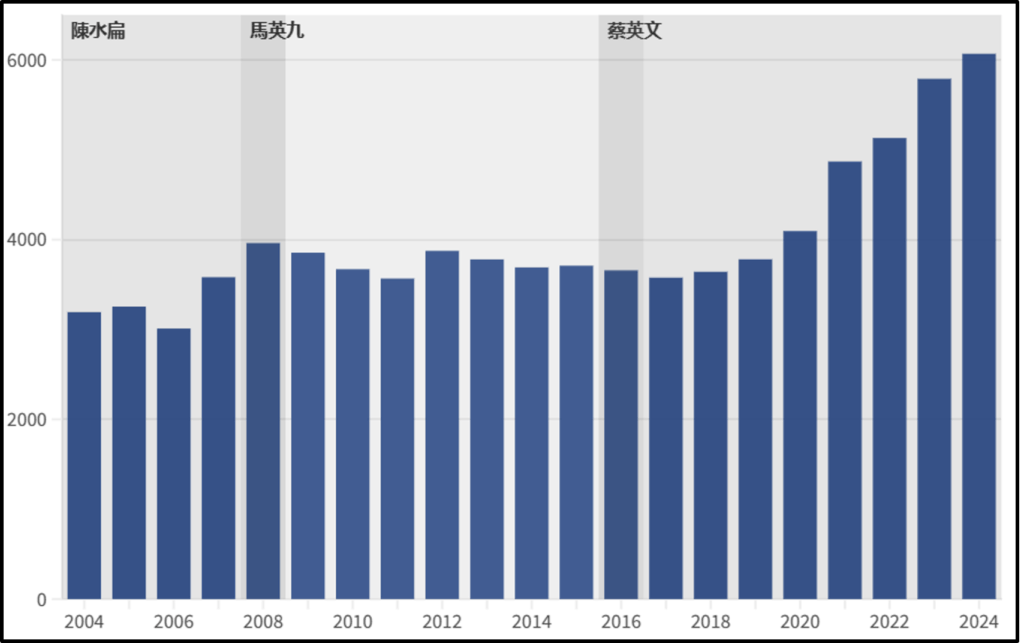
1. What is the proposed increase in Taiwan’s defense spending?
President Lai Ching-te has introduced a supplementary budget of $40 billion aimed at enhancing military capabilities and acquiring new weapons. He intends to raise Taiwan’s defense expenditure to 3.3% of GDP by next year, with a goal of reaching 5% by 2030, marking a significant milestone in Taiwan’s military investment history.
The surge in military spending is a response to what President Lai describes as Beijing’s “unprecedented military buildup” and rising tensions in the Taiwan Strait and Indo-Pacific region. Reports suggest that China aims to be invasion-ready by 2027, prompting Taiwan to expedite its defensive measures, including the development of a “T-Dome” air defense system designed to counter threats from Chinese drones, missiles, and aircraft.
The Legislative Yuan, which is dominated by the opposition Kuomintang (KMT) party, poses potential hurdles for President Lai’s budget proposal due to its more conciliatory approach towards Beijing compared to Lai’s Democratic Progressive Party. To navigate this challenge, it is reported that Lai plans to categorize some Coast Guard funding under “Ocean Affairs” while labeling other expenditures as defense-related.
4. How does this budget proposal impact U.S.-China-Taiwan relations?
This announcement comes amid fluctuating U.S.-China relations following recent diplomatic engagements between President Trump and Chinese President Xi Jinping. While Washington has urged Taiwan to bolster its defense spending, some U.S. officials have suggested that Taiwan should allocate around 10% of its GDP for defense—significantly higher than Lai’s proposed 5%.
Japan has been increasingly involved in bolstering Taiwan’s security framework, with Defense Minister Shinjiro Koizumi visiting Yonaguni—Japan’s closest island to Taiwan—to emphasize fortification efforts along the Ryukyu island chain. These islands could serve as strategic barriers against any potential Chinese naval operations targeting Taiwan from the north, with President Lai expressing gratitude for Japan’s support through what has been referred to as “sushi diplomacy.”


