
Supreme Court’s Role in Climate Change Lawsuits
The Supreme Court is set to take on significant climate change lawsuits this term, as justices are tasked with determining the appropriate venues for these legal battles.
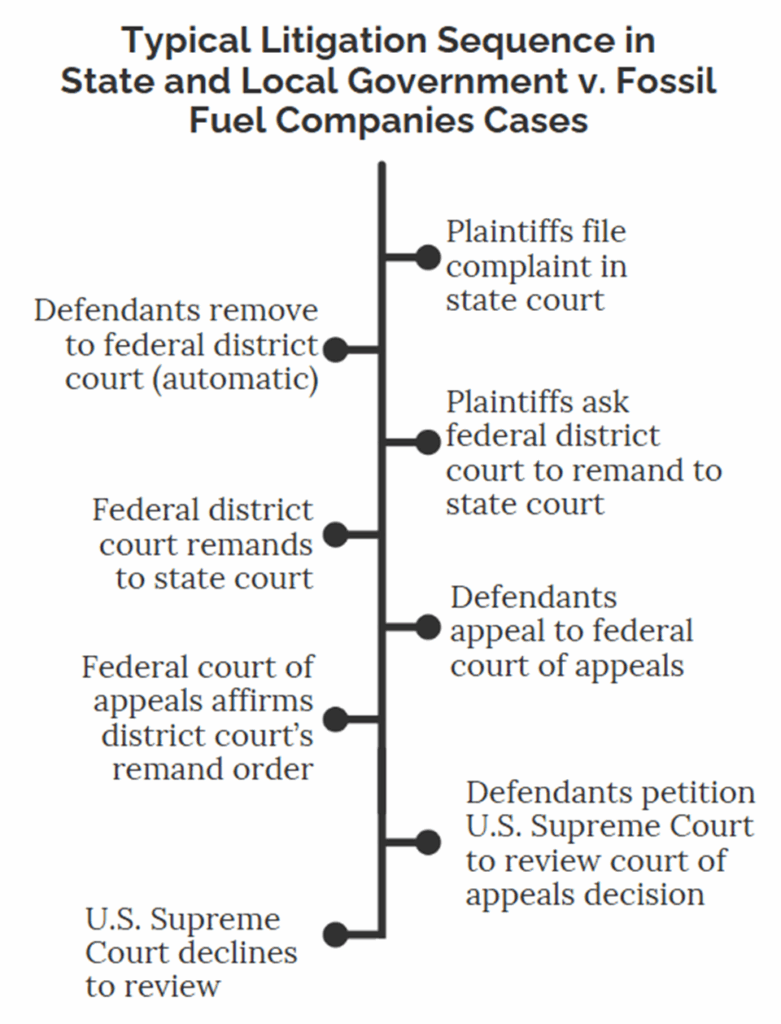
Climate activists aim to file lawsuits in state courts, where they believe they will receive more favorable treatment and can leverage more supportive environmental laws against energy companies. Critics have labeled this strategy as “climate lawfare.” In contrast, the companies involved are pushing for these cases to be heard in federal court, arguing that such matters are more appropriately addressed at that level.
This ongoing conflict is indicative of what may become a continuous wave of lawsuits from climate activists seeking judicial intervention against fossil fuel operations.
O.H. Skinner, a former Arizona solicitor general, commented on the situation during an interview, stating, “All of it is designed to do one thing: drive up the liability number enough to force these companies into bankruptcy, which would be even more extreme than Bernie’s Green New Deal.”
The justices have agreed to hear a case originating from Louisiana where the state and several parishes have sued oil companies. They claim that oil production during World War II has caused long-term climate damage along the coastline that now requires compensation.
Special Coverage: Court Watch with Alex Swoyer
The oil companies argue that they were acting as federal contractors during the war and thus contend that these disputes should be resolved in federal court. Federal law allows cases involving federal officers or their agents to be moved to U.S. courts when relevant actions are taken under federal authority.
The companies assert that these cases belong in federal court due to local governments attempting to sue them as federal contractors for actions taken while fulfilling federal contracts. However, lower courts have ruled that the oil companies failed to demonstrate a sufficient connection between their oil production and their federal contracts necessary for moving the cases.
The state of Louisiana suggests there is a reason why these companies prefer not to face juries made up of local residents along the coast.
The case titled Chevron v. Plaquemines Parish is scheduled for oral arguments on January 12. Additionally, the justices are considering another climate-related case involving Suncor Energy and Boulder County Commissioners regarding claims by Colorado communities about global warming impacts linked to oil company activities.
The energy firms involved argue that allowing states control over energy activities beyond their borders could lead to disastrous outcomes. They emphasize that numerous lawsuits across various states seek billions in damages related to greenhouse gas emissions contributing to global climate change.


