
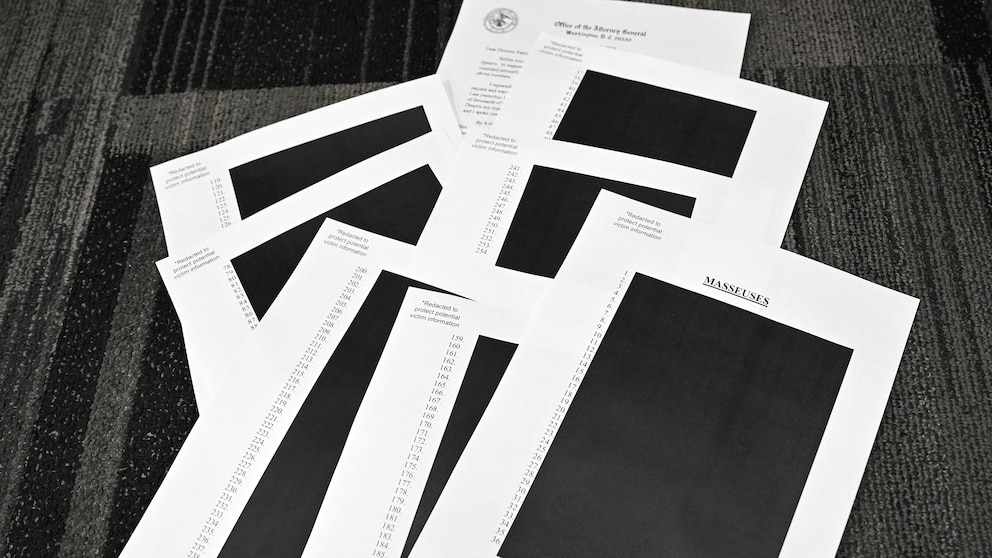
Uncovering Redacted Information
Recent social media activity has highlighted ways to expose the redacted content in the Jeffrey Epstein files released by the Department of Justice. Users are sharing techniques to bypass the censorship applied to these documents.
A notable video circulating online illustrates that copying and pasting text from a civil case involving Darren K. Indyke and Richard D. Kahn, executors of Epstein’s estate, can unveil previously hidden material.
One such redacted line indicates that the defendants “attempted to conceal their criminal sex trafficking and abuse conduct by paying large sums of money to participant-witnesses, including by paying for their attorneys’ fees and case costs in litigation related to this conduct.”
The Justice Department has faced criticism regarding these redactions and provided clarification on how these revelations are occurring. They stated, “Redactions were applied to those documents when they were filed in the respective court cases back in the day. We reproduced the documents as we had them in our possession.”
The total number of redactions that can be reversed remains uncertain.
Related: Senators call for DOJ audit on Epstein file releases
Since last week, thousands of documents concerning investigations into Epstein, who died by suicide while in federal custody in 2019, have been released as mandated by recent legislation. The department has been criticized for delays and extensive redactions, leading to allegations of a political cover-up.
The Justice Department asserts that many redactions were necessary for protecting victims’ identities.
The situation has fueled speculation due to Epstein’s connections with influential figures such as former President Bill Clinton, President Donald Trump, and Andrew Mountbatten-Windsor, a former British prince.
The department maintains that there is no political agenda influencing these redactions. Deputy Attorney General Todd Blanche emphasized that “the only redactions being applied to the documents are those required by law — full stop.” He added that names would not be withheld unless they pertained to victims.
The department also indicated that some materials released may be fraudulent, contributing further to online speculation.
A recent release includes a 12-second video reportedly recorded at 4:29 a.m. on the day of Epstein’s death, which has astonished social media users due to its timestamp being two hours before his body was discovered.
A related document suggests this video is not genuine; it appears similar to one uploaded on YouTube in 2019 and was previously sent to federal investigators by independent journalist Younes Ali Kabbaj in 2021.
An additional document reveals an alleged letter from Epstein addressed to fellow sex offender Larry Nassar where he claimed that a certain president “shares our love of young, nubile girls.” This letter also hints at suicidal intentions with statements like “As you know by now, I have taken the ‘short route’ home.” The Justice Department labeled this letter as fabricated after it was flagged by the FBI.
Bland’s Clarification on Misinformation<p>Mr. Blanche took to social media dismissing what he termed “sensationalism and even outright lies” regarding the department’s handling of Epstein-related documents.
“But let’s separate fact from fiction,” he stated. “Document production is just that. We produce documents; sometimes this results in releasing fake or false documents because they simply are in our possession due to legal requirements.”</ p><p>The department has since removed several files related to Epstein from its website for further review and potential redaction.</ p><p>Mr. Blanche pointed out discrepancies regarding both the purported video and letter attributed to Epstein—highlighting issues like incorrect handwriting and postmark dates following his death.</ p ><p>“These are not reality,” Mr. Blanche concluded. “We will continue producing every document required by law without letting internet rumors overshadow factual information.”</ p >


