
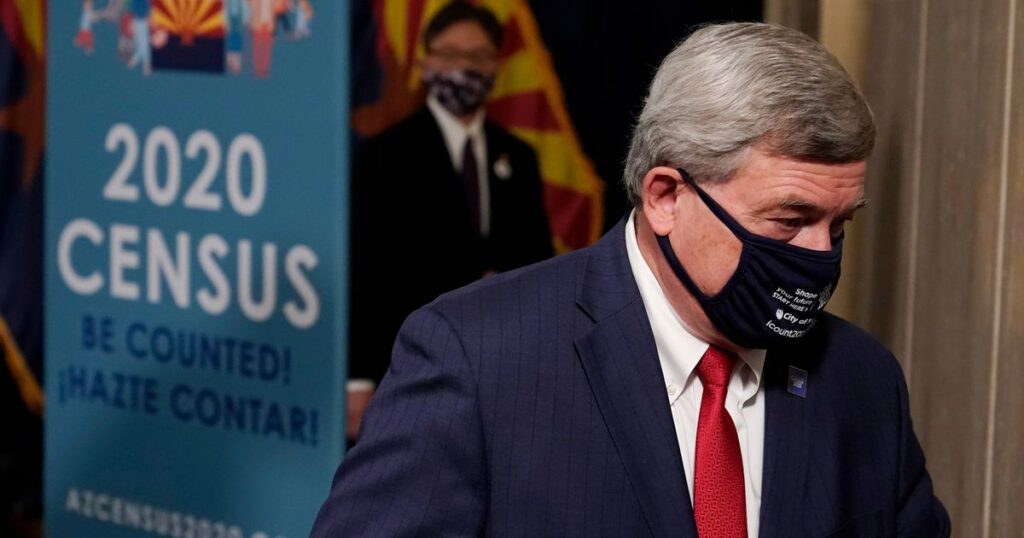
Calls for Census Reform
Congressional Republicans are advocating for significant changes to the procedures of the Census Bureau ahead of the next count, alleging that the 2020 census included “fake” individuals and disproportionately shifted power away from Republican-leaning states due to population undercounts.
The party has reiterated its proposal for the 2030 census to include questions about citizenship and to allocate congressional seats without counting illegal immigrants in the population totals.
Representative Chip Roy from Texas stated that including migrants in the 2020 count favored states with policies that protect unauthorized individuals from federal immigration enforcement. He referred to the 2020 census as a “sanctuary census” during a recent House Judiciary Committee hearing.
Roy argued that if only citizens were counted, it could result in a shift of 10 to 12 congressional seats from Democrats to Republicans.
This hearing followed President Trump’s social media assertions labeling the 2020 count as “rigged,” raising concerns about how the census was conducted and broader philosophical and legal implications regarding who is counted.
Joseph Wade Miller, a senior adviser at the Center for Renewing America, criticized the accuracy of the 2020 census, claiming it was among the most inaccurate in modern history. The Census Bureau’s own report indicated undercounts in six states predominantly led by Republicans and overcounts in eight states controlled by Democrats, resulting in a shift of several seats toward Democrats.
Miller suggested that voters might view the count as manipulated due to malpractice. A data tool known as differential privacy faced heavy criticism during this session; witnesses claimed it distorted census numbers below state totals by adding inaccuracies.
Trey Mayfield, a former lawyer for the census director during Trump’s administration, highlighted specific examples where differential privacy inflated Port Royal’s population by 87% while reducing Stony Creek’s by 43%. He acknowledged challenges in reaching certain populations but defended some post-count modeling efforts as necessary.
This stance drew ire from Representative Tom McClintock from California, who argued against fabricating counts when residents are unaccounted for. Meanwhile, Democrats condemned these hearings as an attack on immigrants and an attempt to gain partisan advantage within Congress.
Democratic Representative Jamie Raskin countered Trump’s allegations by referencing findings from the Government Accountability Office which affirmed that the tally aligned with previous censuses. John Yang, president of Asian Americans Advancing Justice, noted issues within data collection but maintained that overall counts were adequate while emphasizing potential negative impacts of introducing citizenship questions.


