
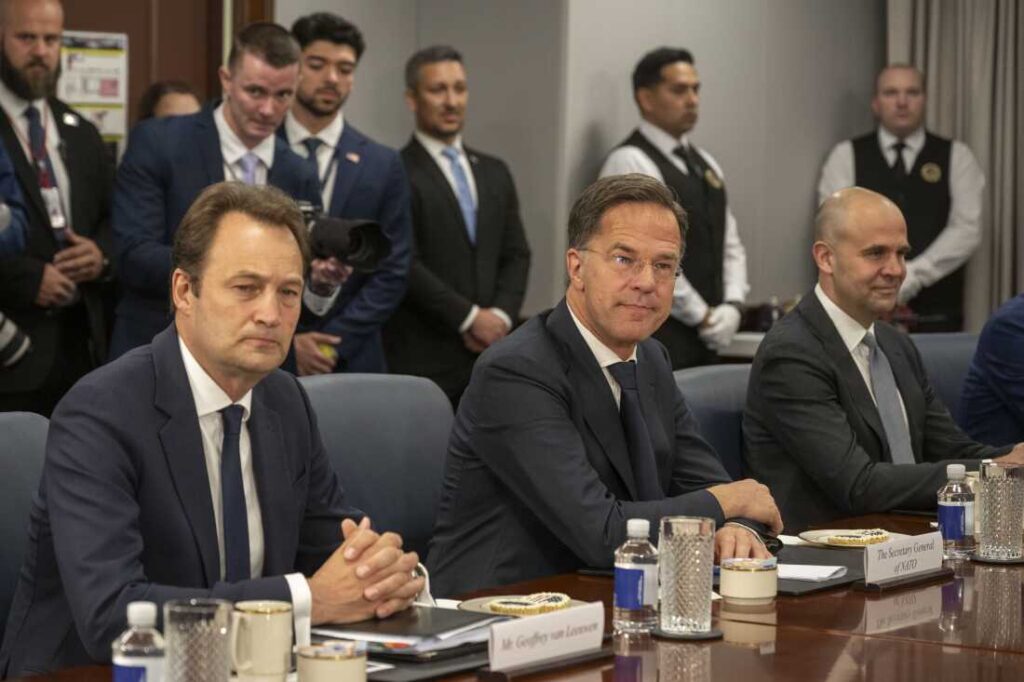
NATO’s Call for Increased Defense Spending
Benedetta Berti, the secretary general of NATO’s parliamentary assembly, highlighted the alignment between NATO’s efforts to encourage member nations to boost their defense budgets and the recent National Security Strategy released by the Trump administration. This strategy emphasizes a shift in American focus towards the Western Hemisphere, as stated during her remarks on Wednesday.
Berti’s office acts as a liaison between NATO headquarters in Brussels, Belgium, and the legislative bodies of its 32 member states. She visited Washington this week for NATO’s 25th Transatlantic Forum, which brought together over 100 European parliament members and U.S. Congress representatives.
The discussions centered on necessary actions for NATO to achieve its primary objective set for the June 2025 Hague summit. Leaders have committed to raising military spending to 5% of GDP and enhancing defense industrial collaboration amid ongoing concerns regarding Russia and evolving geopolitical dynamics.
“There was a lot of consensus over the scale and scope of the challenges ahead,” Berti noted during a conversation with the District-based Defense Writers Group. She emphasized that American lawmakers expressed strong support for NATO, recognizing its crucial role in safeguarding U.S. national security interests.
“There was a recognition of the fact that NATO remains the most effective framework to ensure collective defense,” she added. The White House’s National Security Strategy, published on December 4, signifies a notable change in how Washington will engage with Europe—shifting away from strategic competition with nations like China and Russia towards more collaborative spheres of influence.
Berti stressed that this shift serves as a call to action for European nations: “There is a need for European countries to invest more in defense and to strengthen their entire industrial base.” She pointed out that post-Cold War levels of defense spending are inadequate given current threat assessments.
Berti does not perceive any contradiction between fostering a stronger European core within NATO while maintaining U.S. leadership in the alliance. “Our American friends have been telling us for a long time that Europe needs to step up,” she remarked, noting observable trends in defense spending.
The Trump administration’s peace plan regarding Ukraine suggests it should not join NATO at this time. While acknowledging an open-door policy within the alliance, Berti admitted there is currently no consensus on Ukraine becoming its 33rd member.
The National Security Strategy also questions aspects of cultural direction within the European Union while advocating for what it views as traditional identities. Although Berti refrained from elaborating on this issue, she indicated that opinions among NATO parliamentarians would likely vary widely.


