
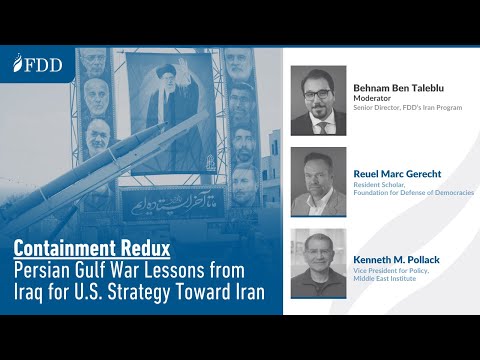
Analyzing Historical Conflicts
The recent 12-day conflict between Iran and Israel in June, while separated by decades from the 1991 Gulf War, still offers valuable lessons according to Kenneth M. Pollack, a former director for Persian Gulf affairs at the National Security Council. He emphasized that insights gained from the U.S.-led coalition’s efforts to remove Iraq from Kuwait remain relevant today.
Pollack, now vice president for policy at the Middle East Institute, stated that it is crucial for Washington policymakers to reassess their approach to Iraq during President George H.W. Bush’s administration in light of current operations against Iran. He remarked, “There were certainly things that we learned in the course of our containment of Iraq. We did some things badly. We did some things better.” He urged that forgetting these lessons would be a significant oversight.
Experts point out notable similarities between Saddam Hussein’s Iraq in 1991 and today’s Iran under Ali Khamenei. Both leaders are characterized as anti-American autocrats with ambitions for weapons of mass destruction and a history of targeting Israel while suppressing their own populations.
While Pollack advocates learning from past experiences, he cautioned against misapplying those lessons due to differing geopolitical contexts. He noted that the United States today is markedly different from its stance in the 1990s.
Reuel Marc Gerecht, a scholar at the Foundation for Defense of Democracies and former CIA officer focused on Iran, believes that parallels between Iraq and Iran are not as clear-cut. He highlighted that public sentiment was largely supportive of military action against Iraq back then, contrasting sharply with today’s bipartisan reluctance to engage militarily with Iran.
Gerecht suggested that only a significant provocation from Tehran—such as missile attacks on U.S. or allied vessels—might prompt Washington to consider military action beyond airstrikes.
He described Saddam Hussein as a delusional egomaniac openly seeking regional dominance, whereas Khamenei appears more cautious in his ambitions.
Pollack expressed a desire for a more assertive U.S. policy towards Tehran, potentially advocating regime change; however, he doubts this aligns with current administration priorities.
“I don’t think this administration is interested in containment,” Pollack stated. “I think the President wants to make a deal with the Iranians.”


