
Balancing Safety and Rights
House lawmakers are currently working on a series of bills aimed at enhancing online safety for children. Their objective is to find a balance between compelling technology companies to implement protective measures and safeguarding users’ rights.
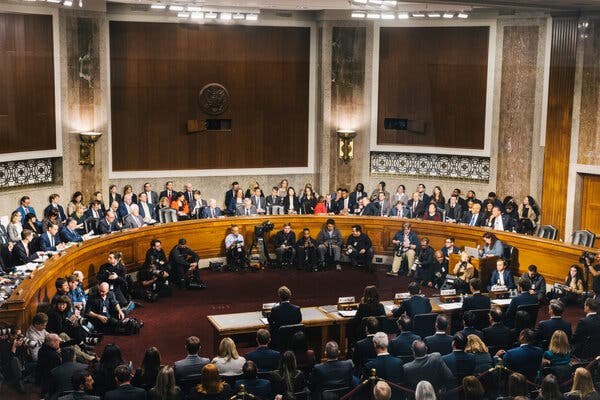
The House Energy and Commerce subcommittee convened on Tuesday to discuss 19 proposed bills intended to foster a safer digital environment for minors. The aim is to refine these proposals to garner widespread support for legislation that can successfully pass through the House.
Rep. Gus Bilirakis, a Republican from Florida and the subcommittee chairman, emphasized that “these bills are not stand-alone solutions.” He noted that they work together to create the safest possible environment for children, acknowledging that no single bill can comprehensively protect kids online.
One significant piece of legislation under consideration is the Kids Online Safety Act (KOSA), which mandates social media platforms to set the highest safety settings for children by default while also granting parents greater control over these settings.
Senate sponsors of KOSA have voiced their dissatisfaction with the House version, particularly regarding its omission of a duty of care provision. This provision would require social media companies to adopt design standards aimed at protecting minors from specific dangers and empower the Federal Trade Commission to enforce compliance.
Bilirakis, who leads the House version of KOSA, stated he made adjustments to ensure its longevity, clarifying that this should not be interpreted as a lack of strength. He asserted, “This bill has teeth,” highlighting its focus on design features rather than infringing on protected speech.
Some Democrats criticized their Republican counterparts for weakening essential elements in KOSA and related legislation meant to update child privacy protections online. Rep. Kathy Castor from Florida expressed concern that these revisions favor Big Tech companies at the expense of parental rights and expert recommendations.
The Senate’s iteration specifies various harms that social media platforms must address, including physical violence, sexual exploitation, suicidal tendencies, depression linked to excessive use, substance abuse disorders, and severe online harassment affecting minors’ daily lives.
The hearing featured witnesses who largely supported modifications made in the House version. Paul Lekas from the Software & Information Industry Association pointed out legal challenges faced by overly broad state laws infringing on free speech rights.
Lekas warned against vague duty of care models like those in the Senate’s KOSA draft which could lead platforms into unconstitutional content regulation territory. He praised the House’s approach as a serious attempt at addressing these complexities.
Kate Ruane from the Center for Democracy & Technology concurred with concerns about broad duty of care standards potentially leading platforms toward censorship due to unclear guidelines about harmful content.
Rep. Jay Obernolte suggested it is reasonable for Congress to impose a duty of care but stressed that it needs clearer definitions so social media companies understand their responsibilities better.


