
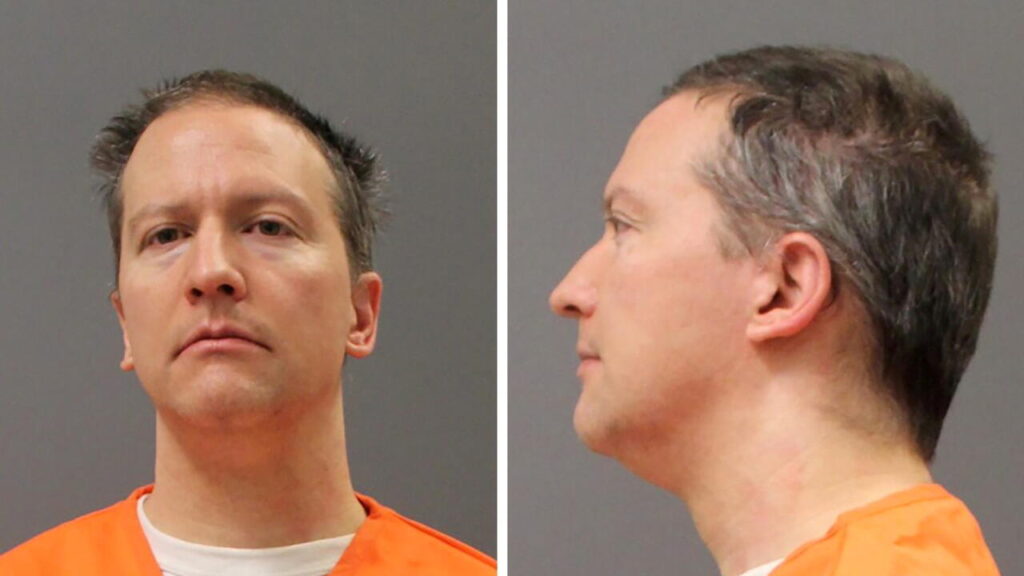
Derek Chauvin’s Appeal for a New Trial
Former Minneapolis police officer Derek Chauvin is pursuing a retrial, claiming that the intense public reaction to George Floyd‘s death contributed to prosecutorial misconduct and unreliable testimony that resulted in his murder conviction.
In his petition for postconviction relief, Chauvin argues that state prosecutors overlooked autopsy findings regarding Floyd’s cause of death. Instead, they relied on medical expert witnesses who referenced video footage of Chauvin’s knee-on-neck restraint to assert that Floyd died from asphyxiation.
The filing also alleges that police witnesses provided false statements regarding department policies on the restraint techniques used by Chauvin.
Chauvin, who is White, was recorded holding down Floyd, who was Black, for approximately nine and a half minutes while Floyd pleaded for help. This incident sparked a worldwide movement against racism and police brutality in 2020, leading to riots in several major cities, including Minneapolis.
The court documents state, “This Court is removed from the hysteria of the day and can finally look at the facts and evidence through a clear lens.” This appeal aims to allow judicial review without public pressure influencing the case.
The central issue remains how Floyd died—whether it was due to strangulation from the neck restraint or heart failure induced by drugs. Chauvin’s legal team contends that prosecutors attempted to undermine Dr. Andrew Baker, Hennepin County Chief Medical Examiner, by having experts testify about Floyd’s cause of death based solely on video evidence.
The petition references a ruling from the Minnesota Supreme Court stating that “video evidence alone, without any support in medical findings, is not an adequate foundation for a causation conclusion.” Dr. Baker concluded that Floyd died from heart failure but noted significant conditions such as fentanyl and methamphetamine presence along with heart disease did not directly cause his death.
The new petition claims that former police officials, including Medaria Arradondo, provided inaccurate testimonies when asserting that the knee-to-neck restraint was not part of department training or policy. Chauvin’s lawyers have obtained sworn affidavits from 57 current and former officers affirming that this technique was indeed part of police protocol.
The filing argues that inadequate scrutiny by prosecutors compromised Chauvin’s due process rights during his 2021 trial. Chief Arradondo testified under oath that while the department permits such restraints, they must be applied lightly and under appropriate circumstances—criteria he stated were not met in Floyd’s detention.
The Minnesota Attorney General’s Office is anticipated to respond to Chauvin’s petition by January 4, 2026. Currently serving a 22-and-a-half-year sentence for murder alongside a concurrent 20-year sentence for violating civil rights related to both Floyd’s case and another incident involving a Black teenager in 2017, Chauvin remains in federal custody in Texas after surviving an attack by an inmate in 2023 due to his involvement in Floyd’s death.
Derek Chauvin is eligible for release in 2037.


