
Criticism from China and Russia
The foreign ministries of Russia and China have expressed strong disapproval of the U.S.-drafted resolution concerning Gaza, which was approved by the U.N. Security Council on Monday. They argue that the measure lacks clarity and does not align with international law.
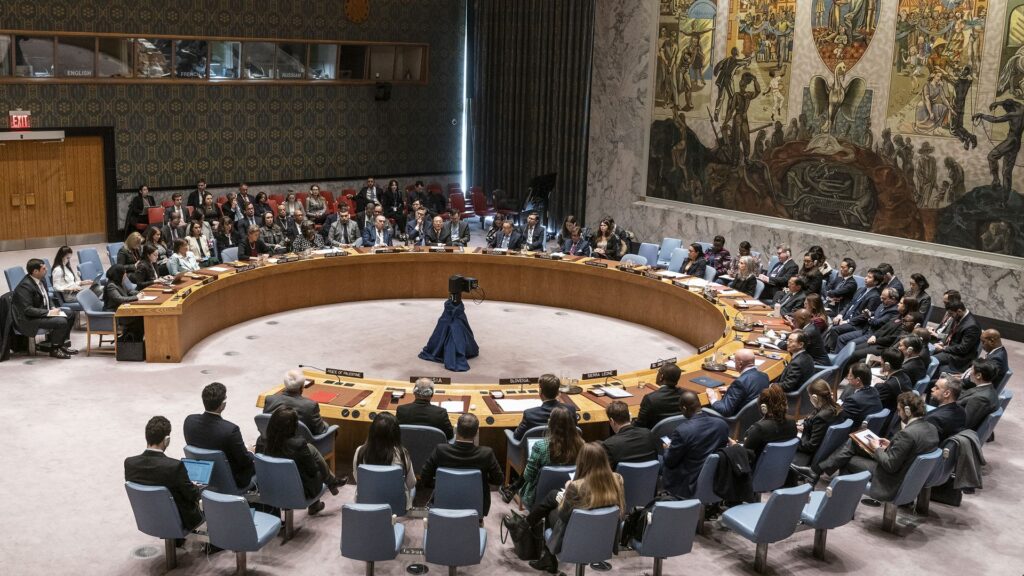
The Security Council voted in favor of a resolution supporting the U.S.-brokered peace plan for Gaza, aimed at stabilizing and rebuilding the region following nearly two years of conflict between Israel and Hamas. The resolution passed without any votes against it, with only permanent members Russia and China choosing to abstain.
The Chinese foreign ministry elaborated on its abstention, stating that the U.S. resolution is overly vague and raises more questions than it resolves. Spokesperson Mao Ning emphasized that the resolution fails to incorporate essential principles such as a “two-state solution” or “Palestinians governing Palestine.”
Mao Ning reiterated China’s commitment to supporting the Palestinian people’s rights in their pursuit of legitimate national recognition, promising ongoing efforts towards a fair and lasting resolution to the Palestinian issue.
The resolution does mention an independent Palestinian state but stipulates that this can only be pursued once Gaza is rebuilt and the Palestinian Authority has undergone reforms.
Russia, too, voiced similar concerns regarding its abstention, insisting that any plan for lasting peace must concretely address the two-state solution. Representative Vassily Nebenzia, speaking at the U.N., highlighted Israel’s rejection of calls for a Palestinian state as a significant barrier.
This past weekend, Israeli Prime Minister Benjamin Netanyahu reaffirmed his government’s opposition to an independent Palestinian state while reportedly agreeing to some aspects of the U.S.-backed resolution.
Nebenzia also pointed out security risks stemming from ambiguities within the resolution. He noted that there is no clear timeline for transferring control over Gaza back to the Palestinian Authority nor certainty regarding how an International Stabilization Force (ISF) would operate autonomously without considering Ramallah’s views.
Nebenzia warned that this approach could further isolate Gaza from the West Bank, likening it to colonial practices.
The abstentions come amid growing international speculation about who will form part of an ISF proposed by President Trump’s peace plan, which envisions European and Arab troops tasked with disarming groups like Hamas in Gaza while maintaining peace.
The specifics regarding which nations will contribute troops to this force remain unclear, as does how long they would be expected to remain in Gaza.


