
Broadview’s Emergency Declaration
In response to violent protests against U.S. Immigration and Customs Enforcement (ICE), the suburb of Broadview, located near Chicago, has declared a “civil emergency” and suspended in-person village council meetings due to escalating tensions.
Katrina Thompson, the mayor of Broadview, issued the emergency order on Monday following a weekend marked by violence, where protesters attempted to breach the city government building. She revealed that she had received a death threat last month and that the village office faced a credible bomb threat in September.
The local administration has faced criticism from demonstrators who argue that it is not doing enough to support their efforts against ICE, which operates a migrant processing facility in Broadview.
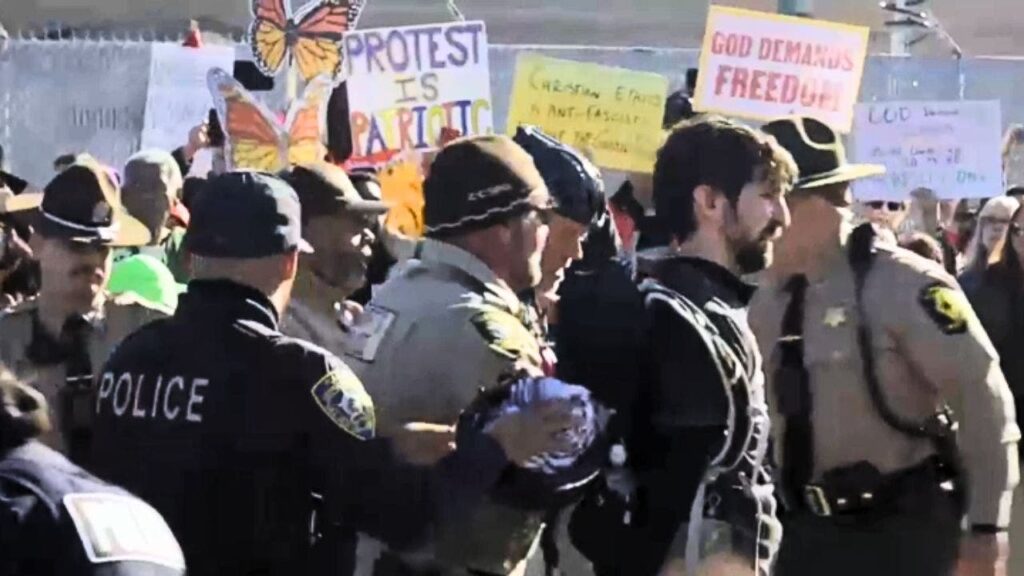
After initially hesitating, Broadview has recently deployed police to manage unruly crowds and restricted protest hours. Tensions escalated on Friday when protesters tried to break through barricades at the ICE facility, leading to clashes with state and local police that resulted in injuries among officers and 21 arrests.
This unrest coincides with President Trump’s plans to send National Guard troops to Illinois for ICE protection, an issue currently awaiting a Supreme Court ruling.
The Department of Homeland Security stated that Broadview is experiencing challenges similar to those faced by ICE nationwide. They reported ongoing attacks on law enforcement personnel and property during these protests.
Mayor Thompson attributed the recent violence to out-of-town protesters and defended her administration’s actions throughout this crisis. “I stand by every decision that has been made,” she asserted.
The emergency order will remain effective until authorities determine that the threat has subsided.
The processing facility in Broadview handles migrants arrested in the Chicago area for fingerprinting and records checks before they are either released or transferred to longer-term detention centers. A federal judge previously ruled that conditions at these facilities were illegal due to prolonged detentions without adequate access to legal resources or basic necessities like food and water.


