
Bipartisan Group Seeks to Repeal 2001 AUMF
A bipartisan coalition of lawmakers is reigniting the campaign to repeal the 2001 Authorization for Use of Military Force (AUMF), a law that has allowed presidents to initiate military actions without congressional consent.
Representatives Thomas Massie, a Republican from Kentucky, and Pramila Jayapal, a Democrat from Washington, argue that it is time to eliminate this measure in order to end what they call “forever wars” and restore Congress’s oversight responsibilities.
“For nearly 25 years, this AUMF has been used to justify prolonged military operations across various nations against groups and individuals that were not even in existence in 2001 and had no ties to the September 11 attacks, all without congressional authorization or oversight,” stated Mr. Massie. “Too many American lives and resources have been wasted on these unending foreign conflicts.”
Ms. Jayapal emphasized that repealing the law is crucial for curbing presidential war powers. “As the Trump administration threatens military action in Nigeria and conducts strikes against alleged narcoterrorists, Congress must reclaim its constitutional authority to declare war in order to safeguard our servicemembers and national security,” she remarked.
The AUMF was enacted shortly after the September 11 attacks, granting the president broad powers to use “all necessary and appropriate force” against those deemed responsible. The Senate passed it unanimously with a vote of 98-0.
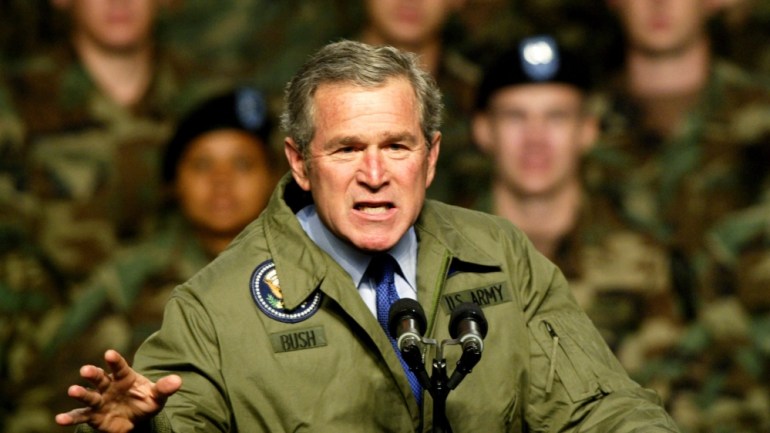
More than two decades later, most lawmakers who originally supported it are no longer serving, yet the law continues to be a fundamental aspect of U.S. military policy. Presidents Bush, Obama, Biden, and Trump have all utilized the AUMF for military operations, leading to ongoing discussions about the extent of unilateral authority held by the commander-in-chief.
Previous attempts at repeal have faltered due to divisions within Congress, where some members caution against limiting presidential power. While Congress possesses the constitutional right to declare war, presidents from both parties have broadened their unilateral powers by citing rapidly emerging national security threats.
The recent military actions taken by the Trump administration against alleged narco-terrorists have intensified this political debate. Recently, Republicans dismissed a proposal from Democratic Senators Adam Schiff of California and Tim Kaine of Virginia aimed at preventing further military interventions in the Caribbean without congressional approval.
Proponents of repealing the 2001 AUMF contend that it is too broad and outdated. They advocate for its revision to better reflect today’s terrorism landscape and provide clearer guidelines on where military engagements can take place.


