
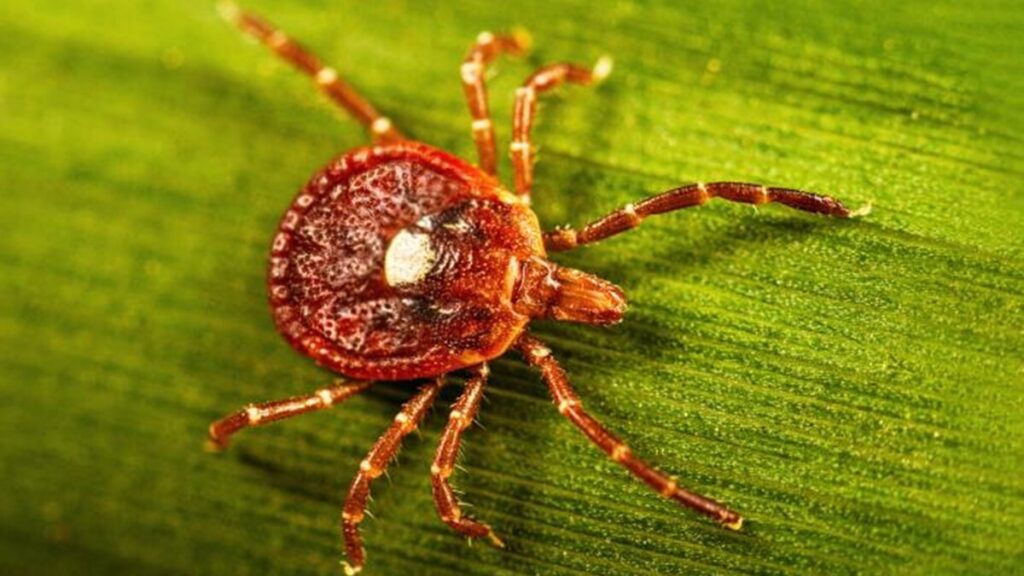
Tragic Case of Tick-Induced Allergy
The death of a 47-year-old man from New Jersey last year is now believed to be the first recorded instance of an allergy to red meat triggered by tick bites.
The individual, whose identity remains confidential, went on a camping trip with his family during the summer of 2024. After enjoying steak for dinner one evening, he awoke in the night experiencing severe abdominal pain, along with diarrhea and vomiting. According to researchers from the University of Virginia School of Medicine, he expressed to his son that he felt as though he was going to die.
Two weeks later, after consuming a hamburger at a barbecue, the man fell ill again and tragically passed away approximately four hours post-meal. The cause was identified as an allergy to red meat resulting from bites from the Lone Star tick. These bites can lead to sensitivity towards alpha-gal, a sugar present in most mammalian meats.
Alpha-gal is absent in humans, as noted by the Centers for Disease Control and Prevention (CDC). Individuals who develop this allergy—termed alpha-gal syndrome—may begin recognizing alpha-gal as harmful after it is introduced through tick saliva. Consequently, allergic reactions occur when alpha-gal enters their system via ingested meat.
Dr. Thomas Platt-Mills from the University of Virginia, who identified this allergy, emphasized that severe abdominal pain occurring three to five hours after consuming beef, pork, or lamb should be treated as a potential case of anaphylaxis. He also noted that itchy tick bites lasting over a week or larvae known as ‘chiggers’ can heighten sensitivity to mammalian meat.
The man’s wife informed researchers that he had experienced multiple chigger bites throughout the summer; however, experts clarified these were actually from Lone Star tick larvae.
“It is crucial for both healthcare providers and patients living in areas where Lone Star ticks are prevalent to recognize the risk of sensitization,” Dr. Platt-Mills stated.
The CDC reported over 110,000 suspected cases of alpha-gal syndrome between 2010 and 2022. A CDC map indicates that Lone Star ticks inhabit regions east of Colorado and Wyoming down through New Mexico and Montana within the Mississippi River watershed, along parts of the Gulf Coast and East Coast, extending southward past most areas in Wisconsin and into parts of Maine, Michigan, Minnesota, New Hampshire, New York, and Vermont.


