
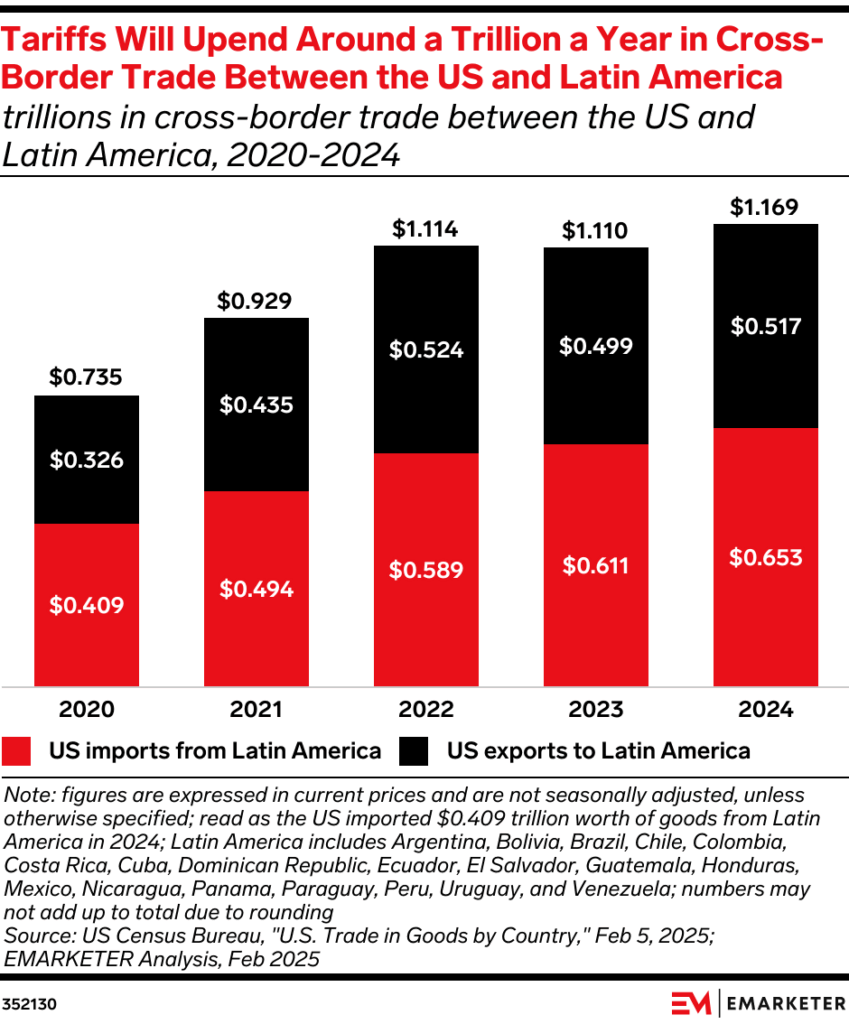
Trade Agreements with Latin America
The U.S. government has announced that it has reached preliminary trade agreements with four Latin American nations: Argentina, Ecuador, El Salvador, and Guatemala. These deals aim to lower the prices of essential household items such as coffee, cocoa, and bananas.
A senior official from the administration indicated that the agreements are expected to be finalized within two weeks. The current tariff rates on goods from these countries that cannot be produced domestically may change once the deals are officially concluded.
At present, the U.S. imposes a 15% tariff on imports from Ecuador and a 10% tariff on those from Argentina, Guatemala, and El Salvador. While these baseline rates will remain in place for now, there is potential for reductions or complete removal on specific goods.
The official stated, “We may reduce tariffs on a list of items that we do not grow or procure here in the United States.” For instance, bananas from Ecuador could see lowered tariffs as they are a significant import.
The agreements also include provisions for potentially lowering or eliminating tariffs on U.S. goods in critical sectors like machinery and chemicals, alongside agricultural products. Additionally, improvements in market access for beef are anticipated.
U.S. Treasury Secretary Scott Bessent hinted at these developments earlier this week, emphasizing efforts to reduce costs for household staples such as coffee and bananas.
This initiative is part of President Trump’s broader strategy to strengthen ties with Latin American countries. Recently, the U.S. provided $20 billion to Argentina while purchasing pesos to stabilize its economy ahead of midterm elections.
The trade deals also aim to facilitate cattle trade as President Trump seeks to lower wholesale beef prices amid declining herd numbers and recent electoral challenges faced by Democrats focusing on affordability issues.
The price of ground coffee has surged by 41% compared to last year’s figures in September, while banana prices have increased by 5.4% since tariffs were imposed across various trading partners.
Critics argue that President Trump’s tariffs have contributed to rising prices; his willingness to consider lowering or eliminating them suggests acknowledgment of their impact on consumer costs.


