
Impact of Tariffs on Imports
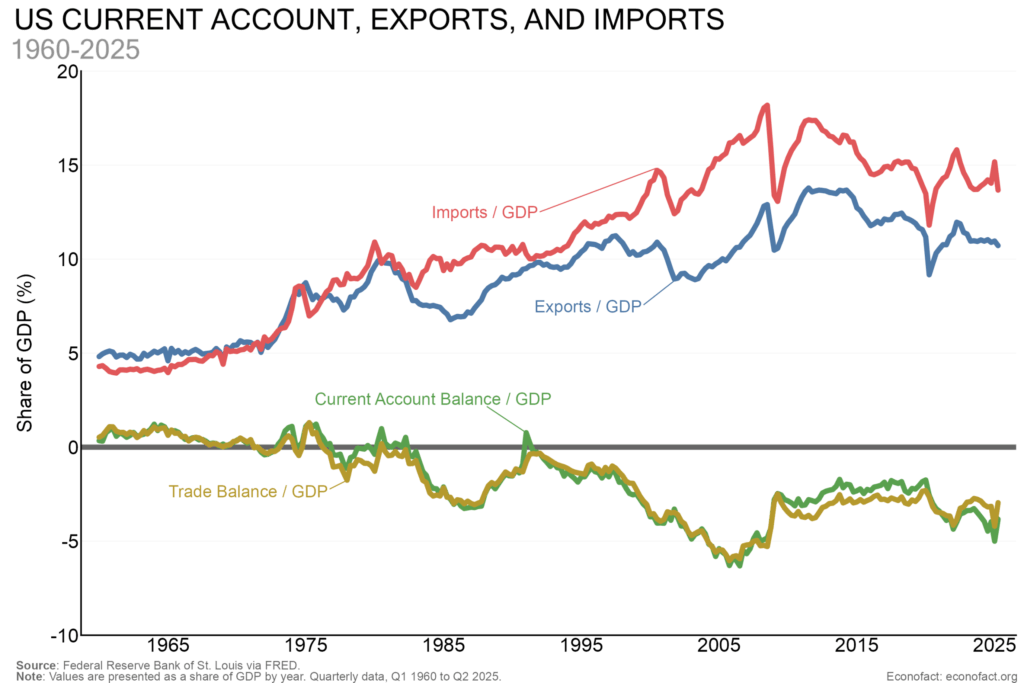
Recent data from the Commerce Department indicates that President Trump’s extensive tariffs are beginning to show measurable effects, with a notable drop in imports and a reduction in the trade deficit.
The U.S. Bureau of Economic Analysis reported that imports fell by $18.4 billion, or 5.1%, reaching $340.4 billion in August compared to July.
Exports remained relatively stable at $280.8 billion, marking a slight increase of $0.2 billion from the previous month.
This shift resulted in a narrowing of the U.S. trade deficit by $18.6 billion, nearly 24%, dropping from $78.2 billion in July to $59.6 billion in August.
The significance of this change is underscored by the full implementation of Trump’s trade policies in early August after several months of inconsistent actions. Most countries now face a minimum tariff rate of 10% on goods exported to U.S. markets, with some rates soaring as high as 50% for products from India and Brazil.
The average effective tariff rate on foreign goods has reached 18.3%, the highest level since 1934, according to The Budget Lab at Yale.
Trump argues that other nations have imposed tariffs on American products for years, leading him to take action against countries benefiting from access to the lucrative U.S. market while restricting American goods.
The tariffs aim to address trade deficits where foreign countries sell significantly more products to Americans than they purchase from U.S. manufacturers.
Nations such as Japan, South Korea, and members of the European Union have reduced their tariff rates by committing to increased purchases of U.S. products and investing in American manufacturing.
A White House spokesperson stated that America’s trade deficit saw an impressive decline of 16.4% year-over-year in August 2025 compared to August 2024, attributing this trend to rising American exports and falling imports—evidence that Trump’s economic strategies are benefiting Americans.
Despite these claims, some economists challenge Trump’s perspective, suggesting that trade deficits are not inherently negative since they can lead to mutual benefits through diverse product availability and competitive pricing for consumers.
While Trump is open to negotiating lower tariff rates, he maintains that they serve as an effective means for generating revenue and enhancing diplomatic leverage while promoting domestic manufacturing.
A significant portion of his tariff strategy is currently facing legal scrutiny.


