
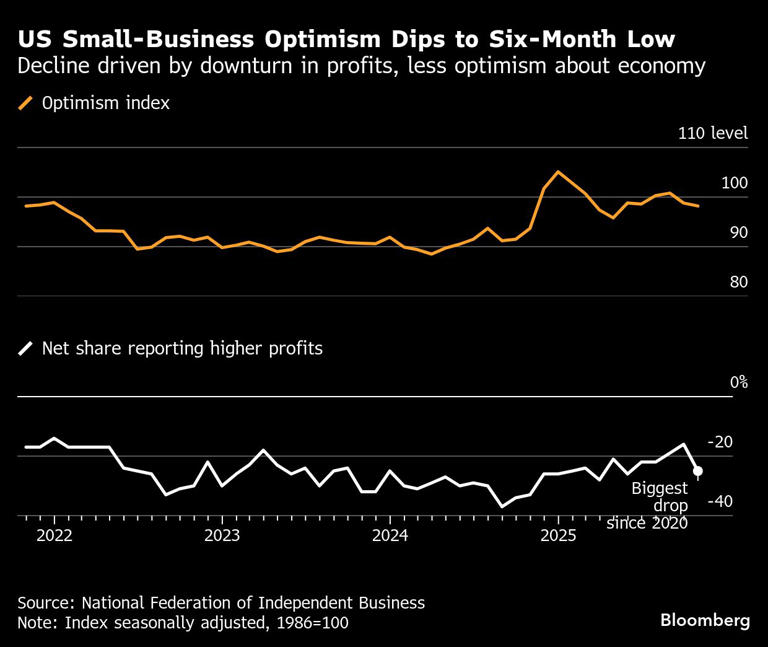
Small Business Optimism Declines
Recent findings from a quarterly survey indicate that small business optimism is waning across several key sectors. The report, released on Tuesday, highlights a downturn in manufacturing despite efforts by President Trump to enhance U.S. production through tax incentives, deregulation, and tariffs.
The National Federation of Independent Business (NFIB) reported that manufacturing was among the more optimistic sectors surveyed in October, alongside construction, retail, and services. However, the optimism index for manufacturing has dropped by 5.8 points compared to the previous quarter’s reading in July. This index reflects businesses’ sentiments regarding their future prospects.
The NFIB noted that the decline was primarily due to worsening expectations for improved business conditions and real sales forecasts. This shift marks a reversal from the positive trends observed between April and July.
President Trump has positioned U.S. manufacturing as a cornerstone of his administration’s agenda. His administration’s strategy includes imposing tariffs on foreign goods to make domestic production more appealing by eliminating tariff costs for local industries. These tariffs have led to significant investments in U.S. factories from foreign companies, complemented by new legislation offering tax incentives for manufacturers establishing operations within the country.
Despite these initiatives, recent changes to tariff policies have introduced uncertainty this year. Some domestic manufacturers have expressed concerns over rising input costs for machinery and metals sourced internationally.
The Trump administration has urged patience as they anticipate that the benefits of implemented tariffs and other policies will become evident in the coming months.
Treasury Secretary Scott Bessent expressed confidence about economic growth in 2026 during an appearance on NBC News’ “Meet the Press,” stating that they have laid the groundwork for strong economic expansion without inflation.
Administration officials contend that delays caused by Democrats over government funding related to healthcare subsidy demands have hindered progress.
While manufacturing trends appear negative, the NFIB indicated that its overall index score remains at 101.1—close to historical averages for the industry.
The NFIB highlighted construction as performing well, being the only sector surveyed that reported increased optimism since July.
The report stated:
“Construction was the only industry with an Index reading above its historical average.”
The rise in this sector is attributed to:
- Increased sales expectations
- A robust hiring outlook


