
Overview
TLDR:
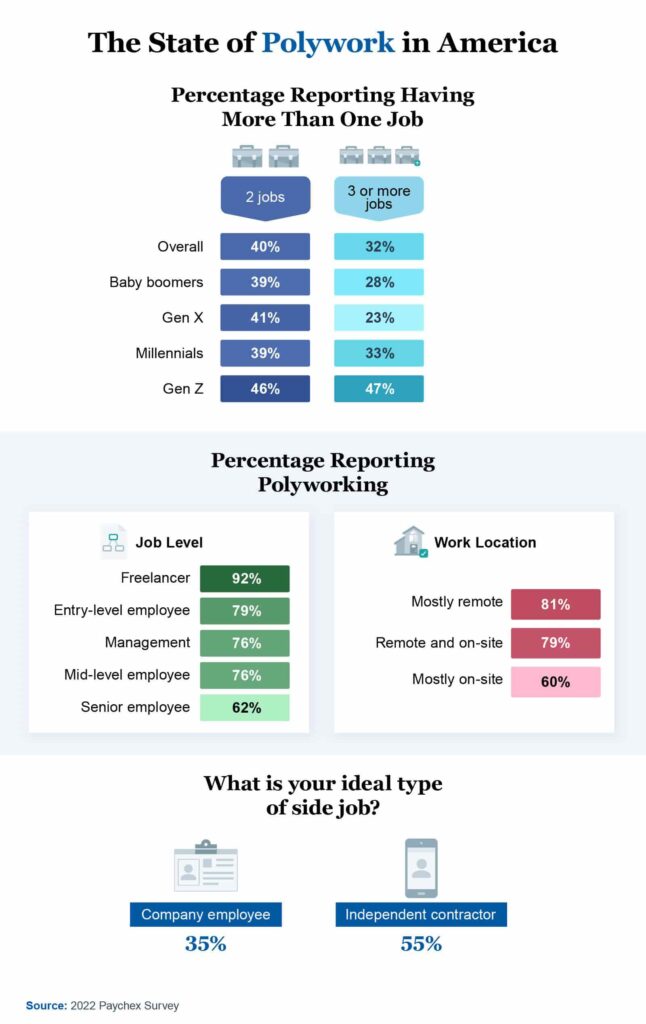
- Nearly 40% of Americans are now managing multiple jobs at once, a trend known as “polywork,” which has evolved from traditional moonlighting.
- Real wages have only increased by 0.8% this year, while living expenses surged by 3%, compelling many to take on two to four jobs just to stay afloat.
- The growth of remote work and AI automation has reshaped the employment landscape, allowing individuals to earn from several employers simultaneously.
- Experts indicate that this shift signifies a “semi-permanent structural change” in how Americans respond to economic challenges.
As wages stagnate and costs rise, more Americans are taking on second, third, and even fourth jobs concurrently—a phenomenon referred to as “polywork.”
The Bureau of Labor Statistics reports that approximately 8.4 million adults hold more than one job, an increase from 5% in 2024. However, data from the Internal Revenue Service suggests that the actual figure may be much higher, with up to 39% of Americans participating in polywork when considering supplemental income.
Lacey Kaelani, CEO of job search platform Metaintro, explains that the term was first introduced during the COVID-19 pandemic when remote work allowed professionals to manage multiple roles simultaneously.
The financial strain is evident. Adjusted for inflation, real wages have risen by only 0.8% this year while living costs have increased by 3%, according to Robert Merritt, CEO of manufacturing placement firm SlateUp.
Merritt states, “Inflation is outpacing wage growth, which will be felt by everyday workers.”
This trend reflects more than just economic necessity; it also indicates a shift in workplace dynamics. Human resources departments began incorporating “polywork” into their terminology in 2023 as AI technology automated various white-collar positions. Brenda Siri, CEO of Corporate Connections based in Texas, notes that this is not merely a temporary trend.
Chad D. Cummings, an attorney from Florida, asserts that it represents a significant and enduring transformation in how people approach their careers.


