
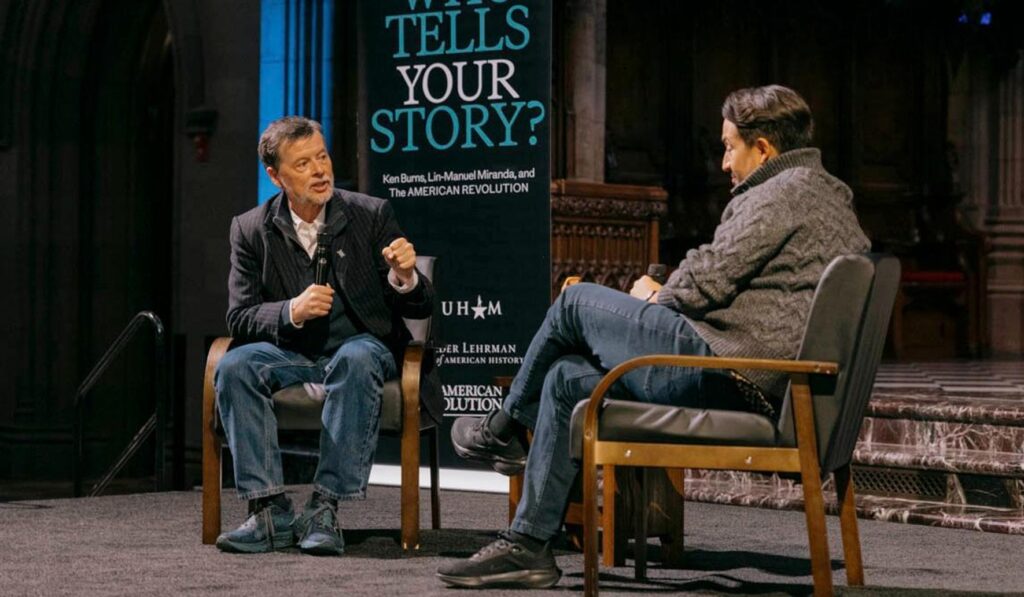
Ken Burns’ Documentary Faces Backlash
In his latest documentary series about the Revolutionary War, Ken Burns found himself needing to amend a controversial statement that critics labeled a “woke bomb.”
The six-part series, titled “The Revolution,” has drawn fire from some quarters for allegedly promoting left-leaning inaccuracies. Among the contentious claims is the assertion that American Indians played a pivotal role in inspiring the Founding Fathers and that a female soldier received only half the compensation compared to her male counterparts.
While some criticisms have been dismissed by those involved with the project, a notable correction has been confirmed. A production official stated that an inaccurate claim regarding Margaret Corbin’s treatment during her service will be removed from future broadcasts and streaming versions.
Joe DePlasco, head of DKC Public Relations, which collaborated with Burns’ company, Florentine Films, explained, “Regarding Margaret Corbin, that is something that we caught too, and it has been fixed in the master, which will be uploaded to streaming, etc.” This correction pertains to Corbin’s injuries sustained while defending Fort Washington in 1776.
The original documentary claimed that Corbin was awarded a lifetime disability pension at half the rate given to wounded men. However, records indicate she received equal compensation as disabled soldiers from the Revolutionary War.
The initial critique came from conservative commentators like Matt Walsh, who accused Burns of infusing race and gender politics into his work. Walsh expressed concern over what he termed as misleading historical narratives presented with undue confidence.
Despite facing scrutiny for its perceived political slant, many historians have praised the series for its portrayal of key battles and events during the Revolutionary War. However, additional criticisms have emerged regarding its narrative choices.
The documentary has also faced backlash for suggesting Benjamin Franklin was inspired by Iroquois governance when proposing colonial unity in 1754. Scholars argue this theory has been thoroughly discredited over time.
The series includes an unverified story about a young enslaved boy who claimed George Washington dismissed his request for payment. Critics argue this anecdote lacks credible documentation and should not have been included as fact.


