
Safety Concerns Ignored
Air traffic controllers expressed safety concerns but were denied a request to reduce the number of arriving flights at Reagan National Airport months before a tragic mid-air collision involving an Army helicopter and an American Airlines passenger jet.
An internal memo released by the National Transportation Safety Board revealed that a Federal Aviation Administration (FAA) official delayed action on the May 9, 2023, request from controllers based in Warrenton, Virginia.
The team at Potomac Consolidated Terminal Radar Approach Control (PCT TRACON) sought to lower hourly commercial aircraft arrivals from 36 to 32 due to safety concerns, including difficulties maintaining the required four-mile spacing between incoming flights.
The PCT TRACON team never received a formal written response; instead, they were verbally informed by an unnamed FAA official that their request would not be escalated up the management chain due to political pressures from lawmakers who rely on frequent flights into Reagan.
Lawmakers depend heavily on this airport for travel between their districts and were actively working on legislation aimed at increasing flight slots. An internal memo indicated that controllers were told it was “too political” to pursue their safety request.
The NTSB is expected to release new safety recommendations following its investigation into the January 29, 2025, crash. While it may not recommend reducing flight slots, it could suggest provisions in aviation safety legislation sponsored by Senator Ted Cruz.
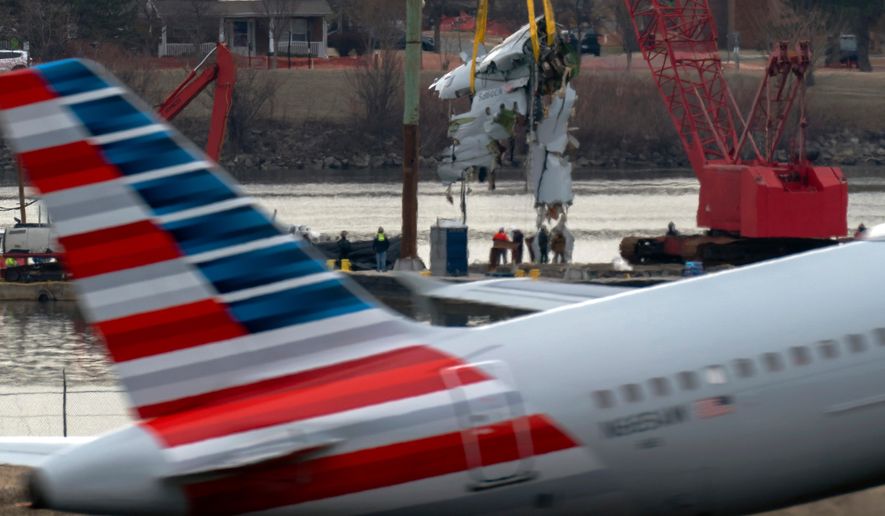
The helicopter collided with American Airlines Flight 5342 as it approached runway 33. The pilots of the Black Hawk helicopter have been blamed for flying too high and wearing night-vision goggles that limited their visibility.
The crash resulted in the deaths of all passengers aboard the jet and three crew members on the helicopter. In response, Transportation Secretary Sean Duffy announced plans to permanently restrict certain helicopter operations near Reagan Airport.
Currently, arrivals have increased back up to about 30 per hour after being temporarily reduced post-crash. However, this increase raises concerns about potential safety risks associated with high traffic volumes at one of the nation’s busiest airports.


