
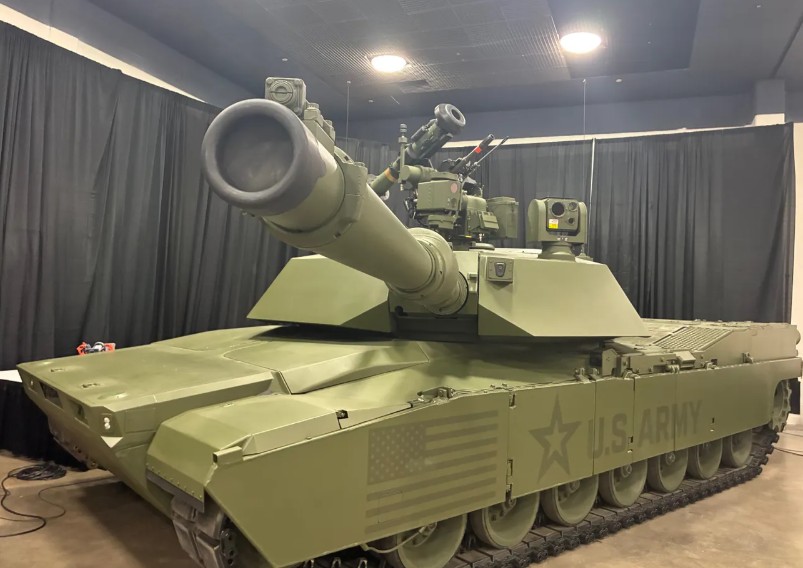
Introduction of the New M1E3 Abrams Tank
Detroit — The U.S. Army showcased an upgraded version of the M1E3 Abrams battle tank at the Detroit Auto Show, impressing attendees with a modern prototype that merges the strength of Motor City engineering with Formula 1 technology.
This streamlined 60-ton tank, lighter than its predecessors which weighed over 73 tons, features a cockpit designed in collaboration with a Formula 1 team and includes a gaming-inspired controller that allows for various driving styles.
The operational prototype, valued at approximately $75 million, was developed by Roush, a high-performance automotive modification firm based in Detroit. The Army plans to deploy a platoon of four tanks for experimental field operations this summer, beginning with safety assessments and gun testing.
General Randy George, the Army’s chief of staff, presented the new tracked vehicle alongside automotive industry leaders to an audience at Huntington Place in downtown Detroit.
The Army is actively seeking to re-engage American auto manufacturers in defense production after more than six decades away from this sector. This initiative aligns with efforts from previous administrations aimed at establishing what the Pentagon refers to as the “Arsenal of Freedom.”
“A year ago, we committed to building a new tank quickly,” General George stated. “And here we are today at the Detroit Auto Show.” Initially, it was expected that an operational prototype would not be ready until 2031.
The latest Abrams model is designed to be 25% lighter than earlier versions while consuming half as much fuel and boasting improved technological capabilities. It can accurately engage targets nearly two miles away and counter drones using smart loitering munitions like the Switchblade.
The tank accommodates three crew members seated in carbon fiber Recaro racing seats adorned with military insignia. A dashboard equipped with monitors slides into position once soldiers are seated, providing comprehensive visibility outside. A detachable steering yoke similar to those used in racing offers enhanced control options.
Colonel Ryan Howell emphasized that collaborating with commercial manufacturers could significantly lower costs for this new vehicle. He noted advancements in diesel technology have made it viable for military use today compared to previous decades.
The powertrain incorporates components from Caterpillar, known for construction equipment manufacturing. Colonel Howell highlighted potential savings by utilizing readily available parts from local dealers during maintenance operations.
The design will adhere to Society of Automotive Engineers standards for major components while ensuring that high-voltage electrical systems follow commercial industry guidelines. This approach facilitates easier maintenance and quicker updates according to Army officials.
The tank is also set up to incorporate the Next Generation Command and Control System (NGC2), which has been undergoing testing since December. This system aims to serve as a data backbone for enhanced operational capabilities.
The Army views this integration as an opportunity rather than a risk. “We’re not taking chances; we’re adopting proven commercial technologies,” said Alex Miller, chief technology officer of the U.S. Army.
This innovative architecture seeks to make military systems operate similarly to modern smartphones by allowing software updates and new applications without necessitating hardware changes frequently.
Colonel Howell expressed optimism about gaining valuable insights from soldiers during testing phases as they directly integrate feedback into development processes—something previously unattainable within traditional acquisition frameworks.


