
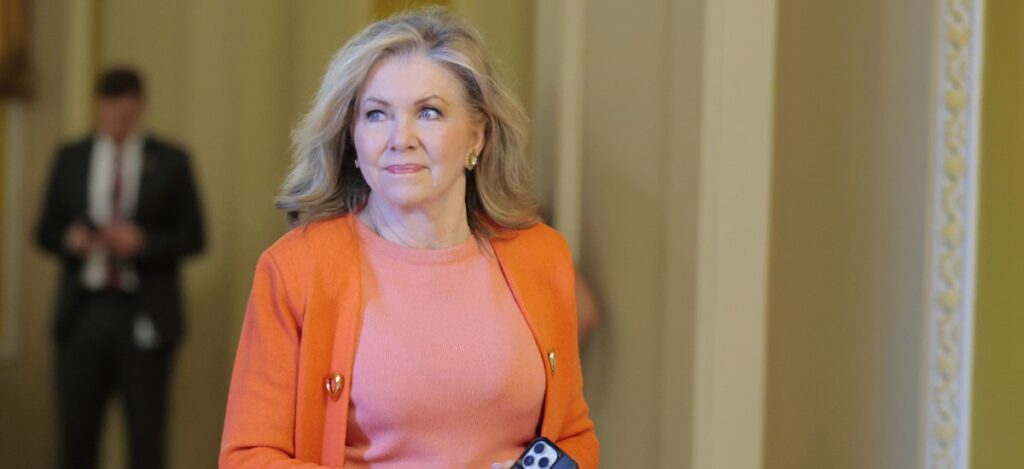
Trump’s Executive Order and Blackburn’s Framework
It is no coincidence that former President Trump’s executive order referenced Senator Marsha Blackburn’s “four C’s.” The senator had previously discussed creating a national framework with Trump, who suggested she collaborate with David Sacks, the White House’s AI and crypto advisor.
This proposal came after Blackburn successfully opposed an attempt by Senator Ted Cruz to impose a 10-year moratorium on state AI regulations as part of the Republicans’ One Big Beautiful Bill Act. Cruz, who chairs the Senate Commerce, Science and Transportation Committee overseeing this issue, stated he had not reviewed Blackburn’s new AI framework and could not comment on it.
Blackburn expressed her concerns about preventing states from enforcing existing laws while awaiting congressional action, labeling it a “really bad idea.” She emphasized her desire for federal standards but acknowledged the slow legislative process from her experiences.
“I have been an advocate for federal preemption since 2012 when [Senator] Peter Welch and I filed the first online privacy bill,” she noted. “That would have established one set of rules across the ecosystem under one regulator, the FTC. That’s how it should be.”
More than ten years later, Blackburn continues to pursue this goal as major tech companies lobby against her initiatives. For instance, Meta has opposed her Kids Online Safety Act (KOSA), which aims to enforce safety measures on social media platforms to protect children.
KOSA passed in the Senate with a 91-3 vote last Congress but faced hurdles in the House due to disagreements over a duty of care provision similar to what Blackburn is proposing in her AI framework. House Republicans have since introduced a version of KOSA that omits this provision.
Blackburn recognizes that duty of care will likely remain a contentious issue but believes it is essential for effective legislation.
Simultaneously, she acknowledges that “tech policy must be light touch” to avoid stifling innovation while establishing clear guidelines for all stakeholders.
Last month, Blackburn released a five-page summary outlining provisions intended for discussion in her upcoming TRUMP AMERICA AI Act draft. This legislation will incorporate elements from KOSA aimed at protecting children and include provisions from her NO FAKES Act designed to hold individuals or companies accountable for distributing unauthorized digital replicas of someone’s voice or likeness.
To safeguard against discrimination based on political affiliation and other protected characteristics, Blackburn proposes regular bias audits for AI systems used by federal agencies along with mandatory ethics training.
The legislation also mandates data center operators fund necessary energy and water infrastructure improvements to avoid burdening taxpayers and requires quarterly reports on job impacts related to AI advancements.
Blackburn indicated that her discussion draft represents just an initial effort toward establishing federal standards but will not be definitive. “Of course, it’s going to get debated and picked apart,” she said. “But we need a starting point.”


