
California as a Political Beacon
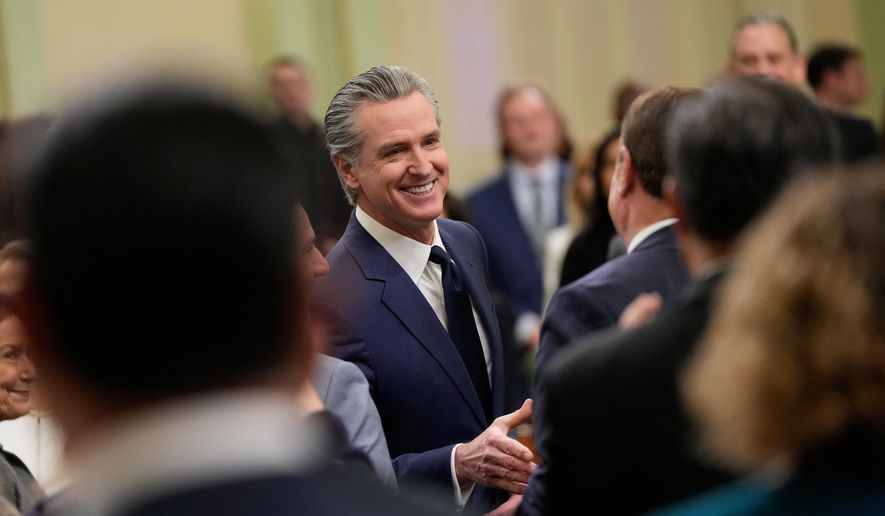
In his final State of the State address, Governor Gavin Newsom emphasized California’s role as a stronghold against President Trump’s influence and the “purposeful chaos” emerging from Washington. He portrayed the state as a “beacon” during these politically turbulent times.
Newsom described California as a forward-thinking alternative to what he termed regressive federal policies. He argued that the state’s progressive tax system, minimum wage increases, and extensive social programs serve as a blueprint for the nation.
“In California, we’re not silent,” Newsom asserted to state lawmakers. “You’re not hunkering down. We’re not retreating. We’re a beacon. This state is providing a different narrative—a policy blueprint for others to follow.”
The governor highlighted California’s commitment to expanding civil rights and supporting individuals of all backgrounds while asserting that no one, including the President of the United States, is above the law.
The response from Republican legislators was critical. State Senate Minority Leader Brian Jones dismissed Newsom’s speech as an “airbrushed spin job,” arguing it obscured California’s status as “the single most expensive place to live in America.”
Jones further stated that Newsom was attempting to mislead the public about his governance record in hopes of securing national support for his presidential ambitions.
The address followed House Speaker Robert Rivas’s moment of silence for Renee Nicole Good, an activist tragically killed by an Immigration and Customs Enforcement agent during a protest in Minneapolis.
The Department of Homeland Security reported that Good allegedly used her vehicle to block officers and resisted their commands before attempting to flee, resulting in an investigation by the FBI.
As he nears the end of his term, Newsom faces significant challenges including scrutiny over his handling of wildfires in Los Angeles and concerns about an impending budget shortfall that could impact his presidential aspirations.
This address also served as an early glimpse into his potential campaign message for 2028. “We face an assault on our values unlike anything I’ve seen in my lifetime,” he remarked, criticizing what he sees as fear-driven governance at the federal level.
The 58-year-old governor has effectively harnessed anti-Trump sentiment among Democrats, positioning himself as a leading candidate should he decide to run for president. His frequent online critiques of Trump and numerous lawsuits against the administration have solidified this stance.
To further shape his narrative, Newsom plans to release a memoir titled “Young Man in a Hurry: A Memoir of Discovery” next month.
In contrast to Trump-led Washington, Newsom painted an optimistic picture of California’s future achievements in democracy and governance. He argued that initiatives like increased wages for workers and substantial investments in education demonstrate that success is intentional rather than coincidental.


