
Major U.S. Strikes in Caracas
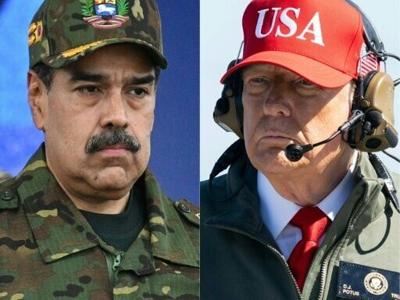
The United States executed significant military strikes in Caracas, Venezuela, resulting in the capture of President Nicolas Maduro, as announced by President Trump early Saturday morning.
Alongside Maduro, his wife, Cilia Flores, was also apprehended during the operation. Their current location remains undisclosed; however, Attorney General Pam Bondi stated on social media that both individuals will face trial in the United States.
This action marks the most substantial U.S. intervention in Latin America since the invasion of Panama and the capture of Manuel Noriega in January 1990.
For President Trump, this military intervention is seen as a culmination of efforts to establish new leadership in Caracas and reinforce American influence within its hemisphere.
The president indicated he would address the nation later on Saturday morning regarding this operation.
On Truth Social, Trump stated: “The United States of America has successfully carried out a large-scale strike against Venezuela and its leader, President Nicolas Maduro, who has been captured and flown out of the country.” He noted that this mission was conducted with U.S. law enforcement and promised further details soon.
Related: Mexico condemns U.S. military action in Venezuela
The U.S. has been applying pressure on Maduro’s government for months through various means including strikes on alleged drug trafficking boats and recent actions against oil tankers linked to illicit activities. Just last month, a strike targeted a dock believed to be involved in drug trafficking.
Despite these pressures, Maduro showed no intention of resigning from office and had recently expressed willingness for direct talks with the U.S., which ultimately led Trump to opt for a military solution instead.
Witnesses reported low-flying aircraft over Caracas early Saturday morning as multiple explosions were heard throughout the city.
The specifics of the mission remain unclear; however, it appears that several key military facilities were targeted within Caracas. Smoke was observed rising from one hangar at a military base while another facility reportedly lost power during the strikes.
In an interview with The New York Times, Trump described the operation as involving extensive planning and praised his troops’ execution: “It was a brilliant operation,” he remarked.
Related: A timeline of U.S. military buildup leading to Maduro’s capture
The entire mission reportedly lasted less than 30 minutes with witnesses claiming they heard at least seven distinct explosions during that time frame.
No immediate comments were made by Pentagon officials following Saturday’s events. The U.S. has maintained significant military assets in proximity to Venezuela including aircraft carriers and tactical jets among other resources.
What happens next?
Political Uncertainty Ahead
The Venezuelan Vice President Delcy Rodríguez claims she is unaware of Maduro’s whereabouts and is demanding proof of life from U.S. authorities.It remains uncertain whether Rodríguez will play any significant role moving forward politically within Venezuela’s future governance structure. The U.S. may support María Corina Machado—recently awarded a Nobel Peace Prize—as a potential leader while likely calling for new elections for Venezuelans to select their next president.Maduro and Flores are expected to face federal charges upon their arrival in New York where he had previously been indicted on “narco-terrorism” conspiracy charges back in March 2020.
“They will soon face American justice,” Bondi asserted via social media.
U.S Deputy Secretary Christopher Landau remarked that this event signifies “a new dawn for Venezuela,” declaring that “the tyrant is gone.”
He shared his thoughts shortly after the strike while Secretary Marco Rubio reiterated previous statements asserting that Maduro does not represent legitimate governance.
Senator Mike Lee mentioned Rubio’s anticipation that no further actions would be taken now that Maduro is under U.S custody.
Until now, despite widespread belief among international observers regarding his electoral loss last year against Edmundo González—Maduro had managed to retain power amidst growing pressures from abroad.
Foreign policy analysts have suggested key figures within Trump’s administration convinced him about Maduro’s vulnerability due largely due changing dynamics since earlier failed attempts at recognizing opposition leader Juan Guaido as rightful authority over Venezuela.


