
Decentralized Command for Immediate Response
SEOUL, South Korea — Taiwan announced on Tuesday that its military command has been decentralized, allowing local commanders to initiate immediate responses to unexpected attacks.
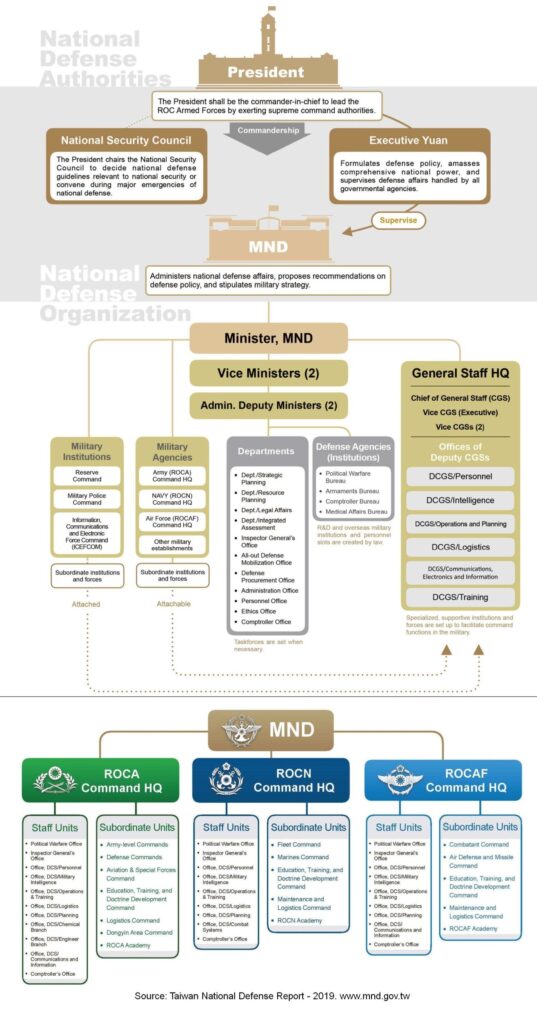
This new approach indicates that Taiwan’s defense forces can maintain combat operations under individual officers, even in the face of electronic warfare that disrupts communications or if Taipei’s political leadership is incapacitated.
The Defense Ministry emphasized in a recent document that, “If the enemy suddenly launches an attack, all units are to implement ‘distributed control’ without waiting for orders and carry out their combat missions under a ‘decentralized’ mode of command.”
The mention of sudden attacks highlights the increasing proximity of Chinese forces to Taiwan since U.S. House Speaker Nancy Pelosi’s visit in 2022. Just this Tuesday, the Taiwanese Defense Ministry reported 13 Chinese aerial sorties near the island, with nine crossing the Median Line in the Taiwan Strait.
Beijing views democratically governed Taiwan as a part of China and aims for its eventual integration under communist rule. The Taiwanese report noted that “the Chinese communists have never renounced the use of force to annex Taiwan” and are intensifying joint military exercises.
Capabilities improving
Concerns have grown regarding China’s potential use of civilian ferries for troop transport, reminiscent of tactics used during the Falklands War. Recent images revealed new amphibious assets being developed by Beijing, including landing barges designed to create a bridge from offshore to landing beaches.
The increasing presence of Chinese naval and air forces near Taiwan raises fears of a surprise assault scenario similar to Russia’s strategy against Ukraine in 2022. This tactic involved prepositioning military units around Ukraine before launching an invasion.
Taipei’s latest report also appears to leverage favorable political conditions among neighboring democracies. The Philippines is responding strongly to encroachments by Chinese fishing fleets supported by coast guard vessels and warships, prompting closer ties with Washington and regional allies like Australia and Japan.
Japan faces significant diplomatic pressure from China as well; newly appointed Prime Minister Sanae Takaichi indicated that threats on Japan’s southern flank could trigger military responses from Tokyo.
A potential invasion strategy from China may involve surrounding Taiwan through naval blockades before launching an attack. However, ongoing developments in neighboring regions complicate this approach for Chinese forces.
The risk implicit in transiting these waterways amid hostilities could force China’s generals and admirals to drop all-around attack.
The U.S. and local militaries have positioned units strategically around maritime choke points near Taiwan, making any naval maneuvers perilous for China. A frontal assault using combined naval and airborne forces could lead to significant casualties due to limited operational frontages.
Taiwan’s directive on decentralized initiative allows quicker local responses while ensuring combat sustainability even if central command is compromised or communication lines fail.
Taiwanese Defense Minister Wellington Koo is set to address lawmakers regarding this report during a session at the Legislative Yuan on Wednesday.


