
Voting Rights Advocates Challenge Texas Map
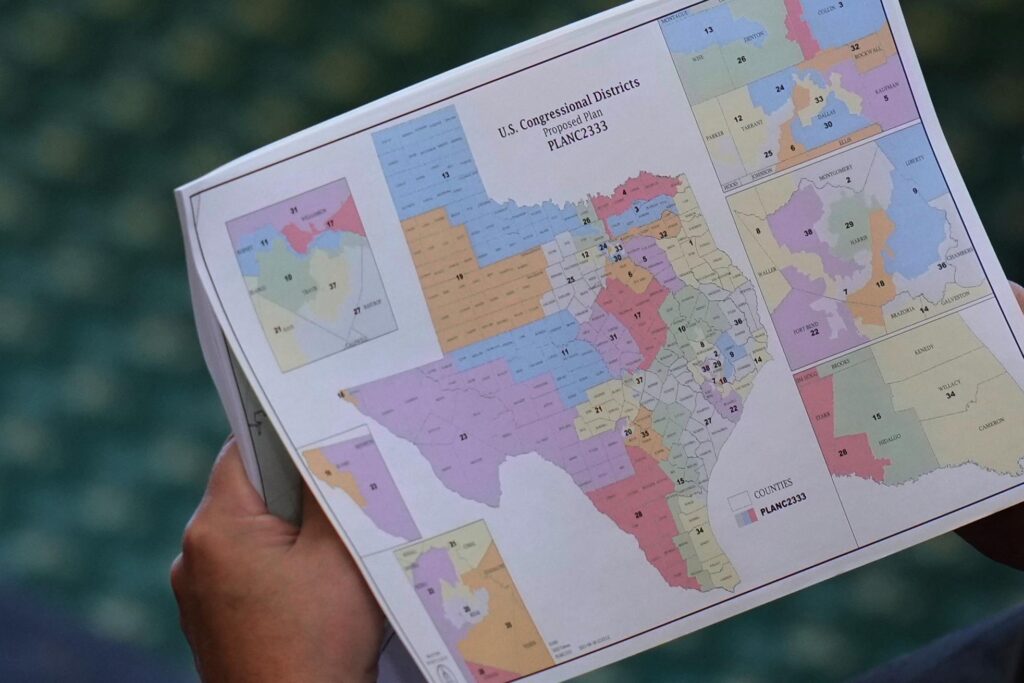
Voting rights advocates have called on the Supreme Court to intervene and prevent Texas from implementing a newly drawn congressional map that they argue favors Republican candidates in the upcoming elections. They claim that the state has engaged in illegal discrimination against minority voters.
Chad Dunn, representing the activists, stated that Governor Greg Abbott and other lawmakers were explicit about their goal to eliminate districts predominantly occupied by minorities, referred to as “coalition districts.”
The newly proposed map could potentially grant Republicans an additional five seats in the next congressional election. Dunn contended that the focus on race in this redistricting effort is excessive and therefore unlawful.
Dunn described the situation as a clear instance of racial gerrymandering in a recent filing with Justice Samuel A. Alito Jr. The outcome of this case could swing up to five seats currently held by Democrats, which Republicans believe are attainable under the revised boundaries established this summer.
A district court previously ruled 2-1 that Texas’s new map was likely illegal, instructing the state to revert to its older, more Democratic-friendly map. In response, Texas sought permission from the Supreme Court to maintain its new GOP-friendly map.
Justice Alito has temporarily suspended the lower court’s ruling while requesting additional briefs by today.
Governor Abbott maintains that the redrawing of district lines was motivated by political strategy rather than racial considerations, asserting that political gerrymandering is permissible under law.
This legal debate is complicated by what is known as the Purcell principle, which advises courts against altering election rules close to voting dates. Judge Brown expedited his ruling to avoid triggering this principle, believing it would allow more time for all parties to adapt.
Alito’s recent action effectively reinstates the balance of power regarding the GOP-friendly map while acknowledging that candidate filing for spring primary elections began on November 8 and will continue through December 8.
Dunn argued on Monday that concerns regarding the Purcell principle should not apply since there is still a year until elections. He also noted that Texas has indicated it might extend candidate filing deadlines by a week for greater flexibility.
Dunn emphasized: “Texas waited until weeks before opening candidate filing to voluntarily redraw its congressional map while intentionally dismantling districts based on race.”


