
Trump’s Announcement
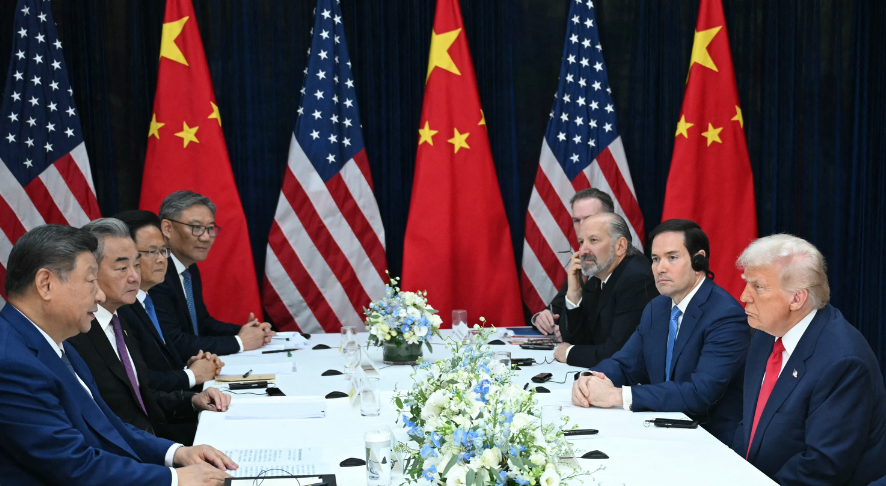
President Trump has stirred international unease with his recent declaration about potentially resuming nuclear weapons testing. On October 29, he took to Truth Social to state that the “Department of War” would initiate tests on par with other nations, claiming that the U.S. is currently the only country not conducting such tests. He justified this stance by asserting that Russian and Chinese nuclear arsenals are nearing American levels.
The announcement prompted swift responses from around the globe. China categorically denied any recent nuclear tests, while Russian President Vladimir Putin expressed that his administration would contemplate testing and sought clarification on U.S. policies. Dmitry Peskov, Putin’s press secretary, labeled the matter as “too serious” for ambiguity, leading Putin to instruct security advisors to evaluate the possibility of resuming Russia’s testing programs.
Former Secretary of State Mike Pompeo supported Trump’s position, arguing that demonstrating U.S. weapons effectiveness is crucial for deterrence, even if it necessitates testing. However, Energy Secretary Chris Wright clarified that any U.S. tests would focus on delivery systems rather than actual nuclear detonations, referring to them as “noncritical explosions” that would not breach nonproliferation treaties.
Daryl Kimball from the Arms Control Association expressed uncertainty regarding Trump’s goals, noting that aside from North Korea, no nation has conducted nuclear explosive tests in this century. Senator Tom Cotton revealed that CIA Director John Ratcliffe confirmed intelligence suggesting “super-critical nuclear weapons tests” exceeding U.S. standards, although details about which countries were involved remain unclear.
This situation unfolds as the New START Treaty nears its expiration in February 2026. This treaty restricts both the U.S. and Russia to 1,550 deployed nuclear warheads and 700 deployed missiles and bombers. Pompeo emphasized the necessity of including China in future negotiations due to its rapidly growing arsenal, which Trump indicated could rival U.S. capabilities within five years.
If critical nuclear testing were to occur by any of these nations—U.S., Russia, or China—it would contravene the Comprehensive Nuclear Test Ban Treaty signed by 187 countries in 1996. While Russia claims it only conducts noncritical testing and China asserts a moratorium on testing, there are ongoing concerns regarding classified low-yield tests among all three powers.
The mixed signals from Trump’s administration have raised doubts about whether this indicates a genuine policy shift or merely strategic positioning ahead of arms control discussions—leaving global nonproliferation standards hanging in uncertainty.


