
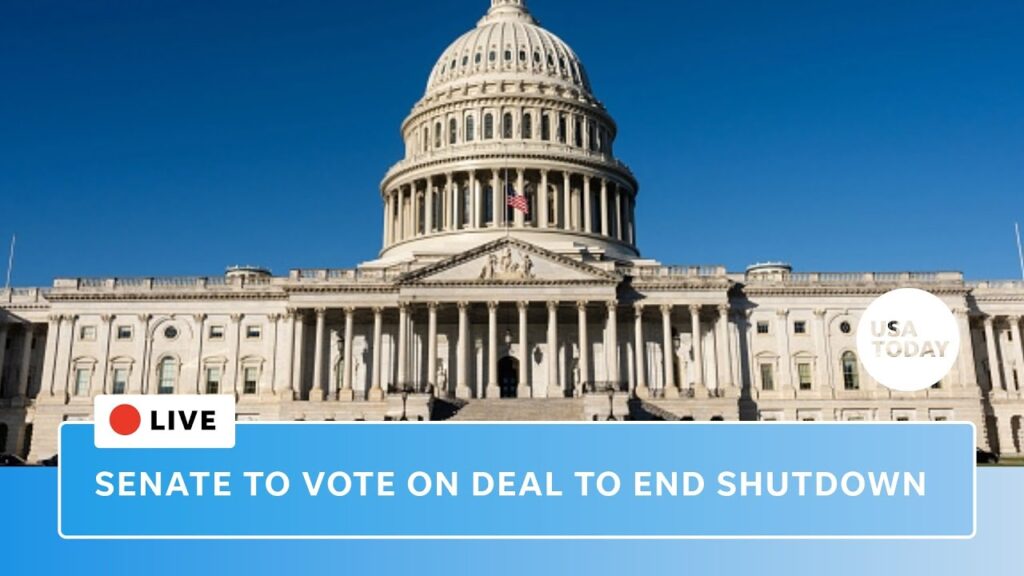
Senate Passes Spending Package
The Senate approved a spending package on Monday night aimed at reopening the government until at least January. This decision followed a standoff over an unrelated extension of enhanced Obamacare premium subsidies.
In a surprising turn, eight Democrats broke ranks with their party’s strategy to secure an extension of the COVID-19 expansion of Affordable Care Act premium tax credits within the funding package.
Instead, they obtained a commitment from Senate Majority Leader John Thune, a Republican from South Dakota, that the chamber will consider an ACA bill chosen by Democrats no later than the second week of December. However, passage is not guaranteed.
The eight Democrats played a crucial role in helping Republicans achieve the 60 votes necessary to overcome a filibuster on the spending measure and supported its final passage.
The spending package will now move to the House, which is expected to vote on Wednesday. If all goes as planned and President Trump signs it into law promptly, the government could reopen that same day, concluding a record-breaking shutdown lasting 43 days.
This Senate-amended legislation extends beyond a temporary stopgap bill previously passed by the House in September before lawmakers left Washington for seven weeks. It includes full-year funding for three out of twelve discretionary appropriations bills for fiscal year 2026, covering essential services like those provided by the legislative branch and Departments of Agriculture and Veterans Affairs.
Senate Appropriations Chair Susan Collins, a Republican from Maine, emphasized how this funding demonstrates appreciation for veterans ahead of Veterans Day. Additionally, food stamp benefits funded through the Agriculture Department will continue uninterrupted until at least September. The recent suspension of Supplemental Nutrition Assistance Program benefits was pivotal in resolving the shutdown.
The spending package also includes temporary funding for nine remaining appropriations bills, maintaining prior year spending levels through January 30. This period aims to provide lawmakers sufficient time to finalize all fiscal year 2026 bills.
Democrats successfully included provisions requiring the Trump administration to recall thousands of employees laid off during the shutdown and ensure they receive back pay along with furloughed workers and those who worked without compensation during this period. Furthermore, it prevents any new notices regarding workforce reductions until after January 30.
This weekend’s bipartisan agreement led to an initial procedural vote on Sunday night and subsequent efforts throughout Monday to expedite remaining procedural votes and final approval. Most votes were decided with a margin of 60-40.
A last-minute attempt by Democrats to include a one-year extension of enhanced Obamacare subsidies was rejected by Republicans along party lines. Republicans celebrated their stance against allowing unrelated policy demands to influence government funding decisions.
Many Democrats expressed disappointment over this outcome, arguing that failure to extend these subsidies would significantly increase premium costs for approximately 22 million Americans. Senator Patty Murray from Washington highlighted that time is running out for saving ACA tax credits as enrollment has already begun.
Republican leaders maintain that extending these subsidies as currently structured would primarily benefit insurance companies rather than effectively reducing premiums for consumers.


