
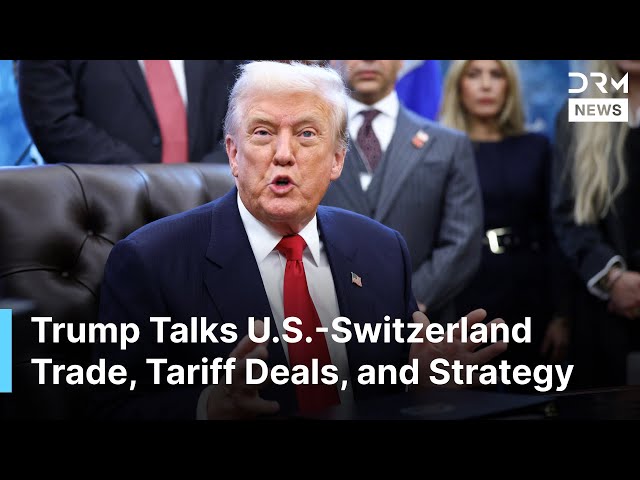
Progress in Tariff Negotiations
President Trump announced on Monday that he is considering plans to lower tariffs on countries such as India and Switzerland, noting advancements in ongoing negotiations. This comes as the Supreme Court reviews a case that could potentially disrupt his trade policies.
Mr. Trump highlighted that India currently faces a significant 50% tariff on its exports to the U.S. He mentioned that India’s reduction in Russian oil purchases would lead to tariff relief.
“We’re going to be bringing the tariffs down on India,” Mr. Trump stated during an Oval Office meeting. “At some point, we’re going to be bringing them down.”
The President also indicated that discussions are underway with Switzerland regarding its 39% tariff rate.
“We hit Switzerland very hard. We want Switzerland to remain successful,” he remarked, emphasizing the economic importance of the small nation.
Switzerland, known for its major pharmaceutical companies, banks, and watchmakers, was surprised by the high tariffs imposed by Mr. Trump.
The President’s tariff strategy is partly based on the disparity between U.S. imports from a country and its exports back to America. The trade deficit with Switzerland reached $38.3 billion in 2024.
Reports suggest Swiss negotiators are working towards reducing their tariff rate to 15%. Other nations have successfully negotiated lower rates by committing to invest in the U.S. or purchasing substantial amounts of American agricultural and aerospace products.
Mr. Trump has implemented these tariffs as a means of gaining leverage over other countries, protecting U.S. industries, and generating revenue for the Treasury.
A group of small businesses has filed a lawsuit against Mr. Trump’s use of a 1977 law for imposing country-specific tariffs, arguing that he has overstepped his authority which should reside with Congress.
The justices expressed skepticism regarding the administration’s defense of its tariff structure during recent oral arguments.
Mr. Trump warned that an unfavorable ruling could have dire consequences for agreements beneficial to the U.S., stating, “It would be an economic disaster; it would be a national security disaster if we lost this case in the Supreme Court.”
Critics argue that these tariffs raise costs for American consumers who import goods and must pay additional duties at customs, often leading to higher prices for everyday items.
The President and his Republican allies are contemplating a proposal where some tariff revenue would be distributed among low- and middle-income Americans.


