
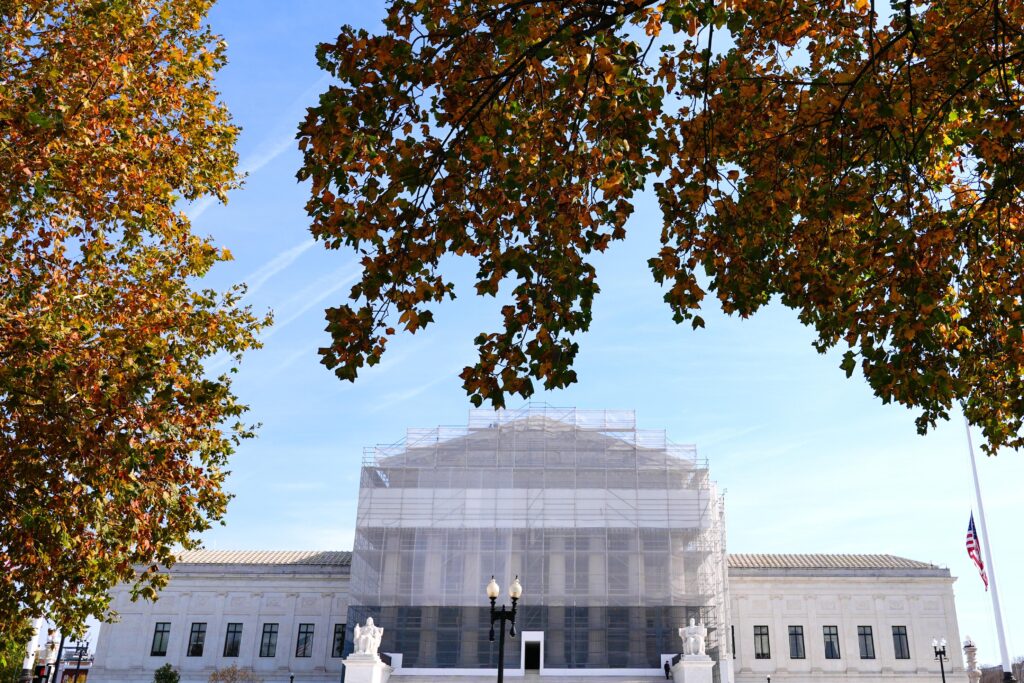
Supreme Court Considers Religious Rights of Inmate
The Supreme Court convened on Monday to deliberate whether a Louisiana inmate, who was compelled to shave his head in violation of his religious beliefs, has the right to sue prison guards for damages.
Damon Landor, a Rastafarian inmate, had maintained knee-length dreadlocks as part of his adherence to the Nazarite Vow. Upon entering the Raymond Laborde Correctional Facility in 2020 to serve a five-month sentence for drug possession, he brought along a federal court ruling from 2017 that supported his claim under the Religious Land Use and Institutionalized Persons Act (RLUIPA) allowing him to keep his hair. However, prison officials disregarded this order and forcibly shaved his head.
The 5th U.S. Circuit Court of Appeals previously determined that Landor could not pursue individual claims against prison officials for damages. Following this ruling, Landor appealed, leading to Monday’s hearing.
Landor’s attorney, Zachary Tripp, argued that there was clear evidence of an illegal assault against his client. He stated, “He was at Respondents’ mercy in federally funded custody when he handed them a copy of controlling precedent holding that [the law] protected his right to keep his hair long. They threw it away, handcuffed him to a chair, and shaved him bald.”
Justice Elena Kagan expressed openness towards allowing Landor to sue the guards for violating his religious rights. She remarked on the general expectation that individuals can bring lawsuits against state employees under such circumstances.
The Religious Land Use and Institutionalized Persons Act was enacted by Congress in 2000 with the aim of safeguarding individuals’ religious rights within institutions like prisons and places of worship.
Justice Neil M. Gorsuch raised concerns about potential implications if inmates are allowed to sue for damages under RLUIPA. He questioned whether this could lead to similar lawsuits from students regarding their rights in school sports contexts.
Lousiana Solicitor General J. Benjamin Aguinaga argued that RLUIPA does not provide an explicit right for individuals to seek damages and suggested that any necessary changes should come from Congress rather than the courts.
The case is officially titled Damon Landor v. Louisiana Department of Corrections and Public Safety. A ruling is anticipated by the end of June.


