
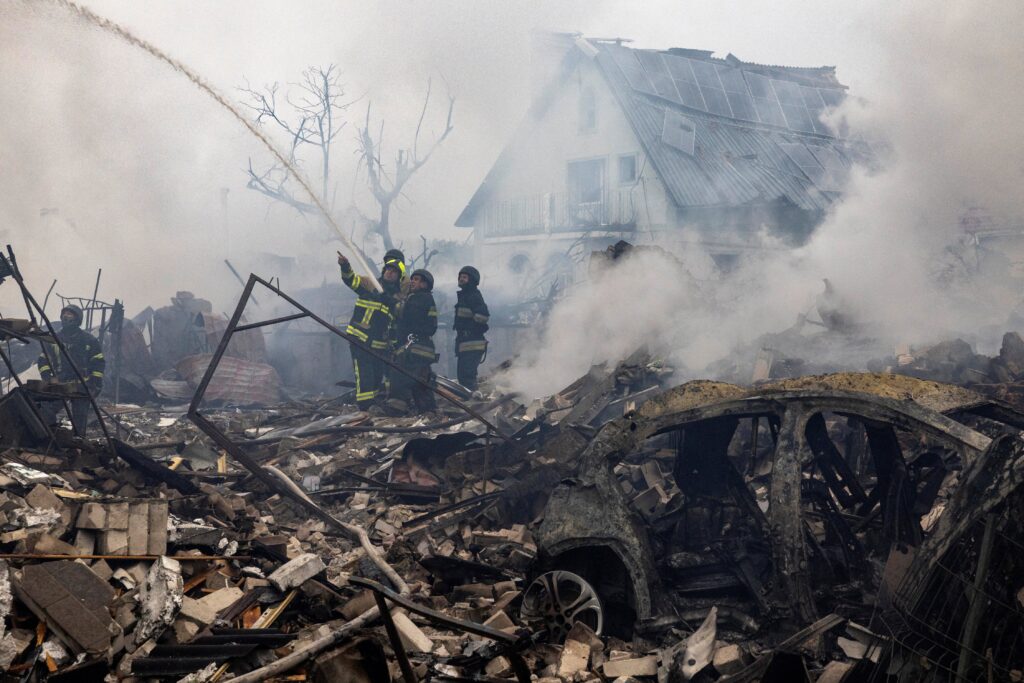
Russian Drone Attacks Decline
In October, Russia deployed approximately 5,300 attack drones against Ukrainian targets, which is about 200 fewer than the previous month. British military officials attribute this decline to deteriorating weather conditions.
Despite the weather-related decrease, periods of reduced activity were often followed by spikes in drone attacks. Reports indicate that Moscow launched between 400 and 650 drones in a single night on various occasions, as noted by British officials on X.
The presence of Russian drones poses a significant challenge for Ukrainian air defenses, especially when these are used alongside short-range ballistic missiles that are also being deployed in large quantities.
The frequency of long-range bomber missions from Moscow over Ukraine also decreased in October. This slowdown is likely due to adverse weather and competing military resource demands, including the conclusion of Russia’s training and testing season.
British officials have stated it is “almost certain” that Moscow aims to saturate key targets within Ukraine, such as military facilities and airfields, to maximize damage while enhancing the survivability of its most advanced missiles.
While four Russian bombing missions were recorded in October 2025, they showed limited missile expenditure. Instead of utilizing their premier AS-23 Kodiak missiles, Russian forces relied on less reliable AS-24 Killjoy air-launched cruise missiles.
According to British assessments, since early October 2025, Russia has prioritized energy-critical national infrastructure as key targets for its bombers.


