
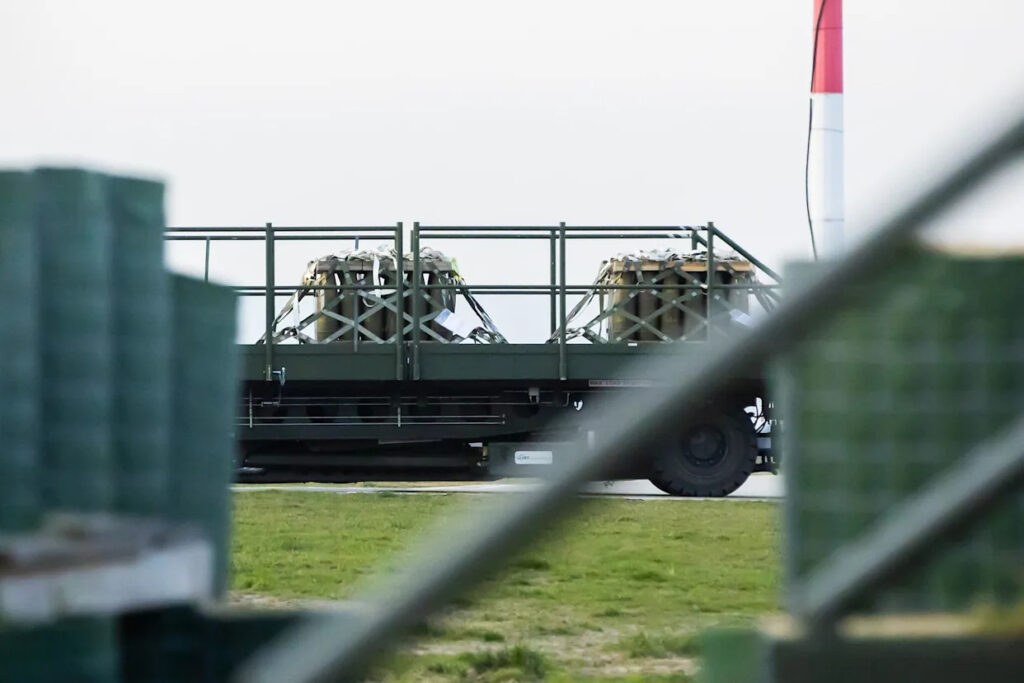
NATO’s Ammunition Production Surges
NATO Secretary-General Mark Rutte has declared that the alliance has successfully closed the “ammo gap” with Russia.
In late July, Mr. Rutte highlighted that Russian factories were producing three times more ammunition in a few months than NATO was able to produce in an entire year.
However, during his address at the NATO-Industry Forum in Bucharest, Romania, this week, he stated that NATO has now reversed its previous disadvantage against Moscow.
Despite falling behind Russia in terms of sheer numbers of bullets and bombs produced, NATO maintained a significant advantage in weapon quality.
“We needed more, and we needed it fast. That means increasing production and shortening delivery times,” Mr. Rutte emphasized on Thursday. “Across the alliance, we are now opening dozens of new production lines and expanding existing ones.”
He noted that NATO is currently producing more ammunition than it has in decades but acknowledged that there is still much work to be done.
“We need to build on this progress in other areas, from high-end air defense to low-cost drone interceptors,” he added. “Here, quantity is key.”
Mr. Rutte stressed the necessity of a robust defense industry for a strong NATO alliance. Member states have committed to spending 5% of their GDP on defense by 2035.
“That’s serious spending, but it is what we need to stay safe,” he remarked. “As part of this, leaders agreed to buy more defense capabilities including jets, tanks, ships, drones, ammunition, cyber capabilities, and space technologies.”
The Secretary-General pointed out Russia’s full-scale invasion of Ukraine in February 2022 as a clear indicator of the threats facing NATO. He warned that even after the current conflict ends, Russia will continue to pose a destabilizing influence in Europe and beyond for the foreseeable future.
“Russia is not alone in its efforts to undermine global rules,” he cautioned. “It collaborates with China, North Korea, Iran, and others who are enhancing their defense industrial cooperation at unprecedented levels.”


